The Future of Commercial Energy: Trends, Policy Impacts, and the Road Ahead for Solar Carports

In the rapidly evolving landscape of commercial energy, solar carports are fast becoming more than just covered parking. They are transforming into multifunctional energy assets that support smart grid integration, electric vehicle (EV) infrastructure, and corporate sustainability goals.

In the rapidly evolving landscape of commercial energy, solar carports are fast becoming more than just covered parking. They are transforming into multifunctional energy assets that support smart grid integration, electric vehicle (EV) infrastructure, and corporate sustainability goals. As technology accelerates and policies shift to meet climate commitments, the future of solar carports is poised to reshape the commercial property sector across South Africa, the African continent, and globally.


Emerging Trends Shaping Solar Carport Technology

1. Integration with Smart Grids and IoT

The future of solar carports lies in their role within interconnected energy ecosystems. Smart grid integration allows these structures to do more than just generate electricity—they can respond dynamically to demand, provide ancillary grid services, and support decentralised energy management.

Paired with IoT (Internet of Things) technology, solar carports are now equipped with real-time performance monitoring, predictive maintenance alerts, and smart load balancing features. These advancements enable businesses to maximise uptime, reduce energy waste, and cut operational costs.

2. Next-Generation Panel Technology

Innovations such as bifacial panels, which capture sunlight from both sides, and thin-film solar modules are improving the efficiency and flexibility of carport installations. These advancements allow for higher yield and more adaptable designs, including carports with architectural curves or integrated branding.
The future of solar carports lies in their role within interconnected energy ecosystems. Smart grid integration allows these structures to do more than just generate electricity—they can respond dynamically to demand, provide ancillary grid services, and support decentralised energy management.

3. EV Charging and Hybrid Infrastructure

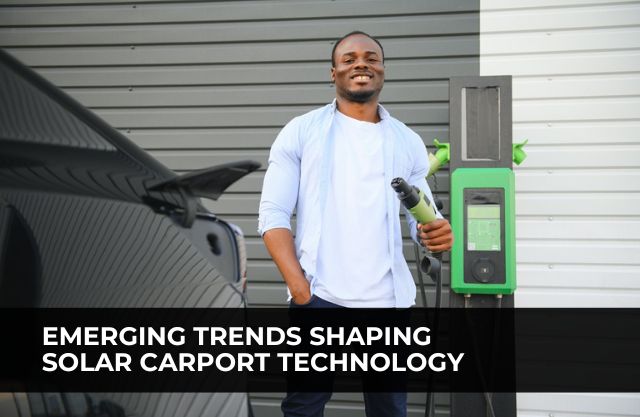
As EV adoption increases across South Africa and Africa, solar carports are expected to integrate EV charging as a standard feature. This turns a parking lot into a clean energy mobility hub—offering convenience, reducing grid load, and supporting national electrification goals.


Policy Impacts and Market Momentum

South African and African Context

Since 2021, the commercial and industrial (C&I) solar sector in South Africa has grown rapidly, supported by relaxed licensing regulations and a desperate need for energy resilience amid ongoing load-shedding. By 2022, over 1.2 GW of C&I solar had been installed, with reports of up to 100 new commercial-scale solar projects being initiated daily across Africa.

Tax incentives such as South Africa’s Section 12B and 12BA deductions allow businesses to write off the cost of solar carport installations—up to 125% in some cases. However, long-term growth still depends on regulatory stability, streamlined permitting, and a reliable utility grid that can accommodate distributed generation.

Global Benchmarks Driving Innovation

Europe continues to lead with aggressive policy support. Italy and France’s “Superbonus 110%” programmes have made solar carports virtually free to commercial property owners by covering installation costs beyond 100%. Spain’s Royal Decree on self-consumption and additional regional grants have pushed widespread adoption.

These policy environments highlight what’s possible—and necessary—for accelerating solar infrastructure adoption. For Africa, the roadmap includes reducing the cost of capital, managing currency risk, and ensuring transparent procurement processes to attract sustainable investment.


What’s Next: Predictions for the Future of Solar Carports

1. Energy Storage Becomes Standard

Battery integration will no longer be optional. Solar carports equipped with energy storage systems will allow businesses to store excess daytime power for night use or grid outages, improving resilience and lowering peak-time energy costs.

2. Grid Participation and Revenue Generation

Commercial carports will serve as energy resources for smart grids. Businesses will participate in demand response programmes, sell excess energy via net metering, and potentially earn from providing grid-balancing services—all from their parking lots.

3. Building Green Infrastructure for Smart Cities

Solar carports are increasingly seen as key enablers of sustainable urban development. Their ability to generate clean power while using already-developed land aligns perfectly with smart city principles. Expect to see more urban developments mandating solar carport integration to meet energy and mobility needs.

4. Data-Driven Sustainability Leadership

With smart monitoring systems, solar carports will offer real-time emissions tracking, energy performance dashboards, and maintenance insights—empowering sustainability officers with the tools to meet ESG targets and communicate progress to investors and customers.


The African Opportunity

With abundant solar resources and a growing demand for energy independence, Africa is well positioned to leapfrog into the future of solar carports. South Africa, in particular, has the industrial capability and policy momentum to become a continental leader in smart, grid-connected commercial solar carport installations.

As governments improve incentives and streamline regulations, we can expect the next wave of solar carport innovation to emerge not just from global tech hubs, but from right here in Africa.


Conclusion

The future of solar carports is dynamic, integrated, and critical to sustainable commercial development. As they evolve into intelligent infrastructure assets, solar carports will drive down costs, reduce emissions, and build resilience in an increasingly volatile energy landscape.

For forward-looking businesses, investing in premium, future-ready solar carports isn’t just a smart move—it’s a strategic imperative.

CTA: Ready to future-proof your commercial property with solar carport technology? Contact S.M.E.I. Renewables today to discuss a solution tailored to your long-term sustainability goals.

Powering the Digital Future: How Solar Energy for Data Centres Boosts Efficiency and Cuts Costs

Solar Energy for Data Centres

Solar energy for data centres is emerging as a critical solution for energy-intensive operations in South Africa, where unpredictable electricity supply and rising costs challenge business continuity. Data centres are notorious for their high energy usage, making them prime candidates for renewable energy solutions. By harnessing abundant sunlight and integrating solar installations with energy storage systems, businesses can not only lower their energy bills but also ensure a more sustainable, resilient power supply.


The Energy Challenge in Data Centres

Globally, data centres account for an estimated 1-3% of total electricity consumption, a figure that continues to grow as digital services expand. In South Africa, the challenge is compounded by unreliable grid power and frequent outages due to infrastructure issues. For example, the Council for Scientific and Industrial Research (CSIR) has highlighted that power disruptions have a significant economic impact on the country, affecting sectors with high energy demand—including data centres (CSIR). As data centres operate 24/7, even minor disruptions can result in substantial financial losses and operational inefficiencies.


Solar Energy: A Reliable and Abundant Resource

South Africa’s geographical advantage is its abundant sunshine, with many regions receiving over 2,500 hours of sunlight per year. This makes solar energy a particularly attractive option for powering data centres. Solar installations can generate a significant portion of a data centre’s power needs during peak sunlight hours, reducing dependence on the national grid. Moreover, when combined with energy storage systems, solar solutions can provide a continuous, reliable power supply—even during periods of grid instability.

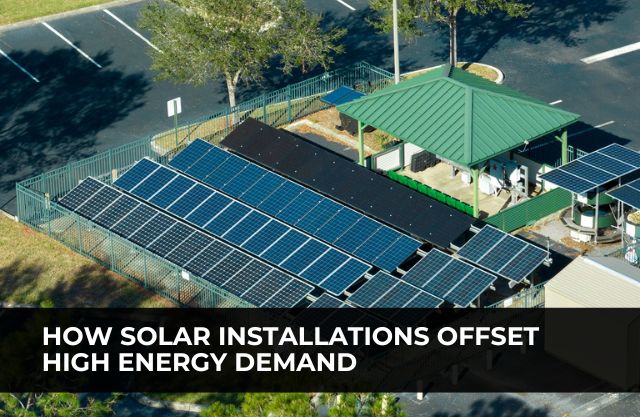
Solar Installations Offset High Energy Demand

How Solar Installations Offset High Energy Demand

Solar energy systems can be designed to meet the high and constant energy demands of data centres. Rooftop solar panels, for instance, can be installed on the available roof space of data centre facilities, while ground-mounted systems on adjacent land can further boost energy production. By integrating these systems with battery storage, data centres can capture excess energy during the day and deploy it during outages or periods of low sunlight. This not only ensures operational continuity but also helps stabilise energy costs over the long term.


Global Examples of Solar-Powered Data Centres

Several global tech giants have already demonstrated the benefits of renewable energy integration in data centres:

  • Apple’s Data Centres: Apple has built data centres powered entirely by renewable energy, including large-scale solar farms that supply a significant portion of their power needs. Their North Carolina data centre, supported by a 100-acre solar installation, is a prime example of how solar energy can reliably power high-tech operations.
  • Microsoft’s Azure Data Centres: Microsoft has committed to powering its Azure data centres with 100% renewable energy by 2025. Solar installations at several of these facilities help offset energy consumption and reduce operational costs.
  • Facebook’s Luleå Data Centre: Situated in Sweden, this facility leverages renewable energy—part of which is solar—to maintain energy-efficient operations even in a challenging climate.

While these examples are from developed markets, they serve as an inspiration for South African data centre operators who face similar challenges of high energy demand and unreliable grid power.


The South African Context: Opportunities and Incentives

In South Africa, the case for solar energy in data centres is particularly compelling. With government initiatives aimed at promoting renewable energy, such as the Expanded Section 12B Tax Allowance and the R4-billion rooftop solar incentive announced in the 2023 budget (SANews), businesses have strong financial incentives to adopt solar solutions. These programmes help reduce upfront costs and improve the return on investment (ROI) of solar installations, making it a smart move for data centres looking to future-proof their operations.

Beyond Cost Savings: Sustainability and Operational Resilience in Renewable Energy

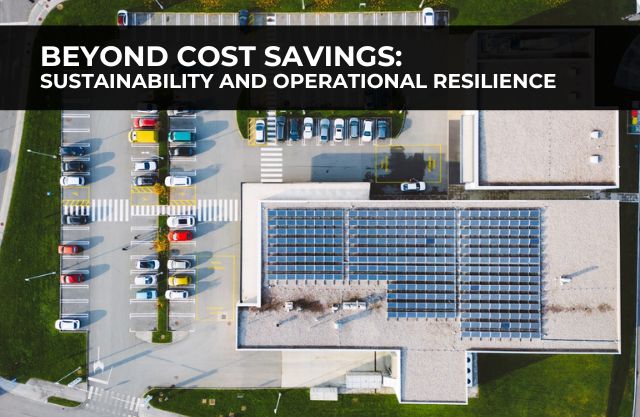
Beyond Cost Savings: Sustainability and Operational Resilience

Implementing solar energy solutions in data centres goes beyond cost reduction. It significantly cuts the carbon footprint of these facilities, aligning with global sustainability targets and enhancing corporate social responsibility. For companies operating in a digitally driven and environmentally conscious marketplace, transitioning to renewable energy not only contributes to a greener future but also enhances brand reputation. Furthermore, the operational resilience provided by solar energy systems—especially when combined with battery storage—ensures continuous service even during extended outages, a critical factor for maintaining business continuity.


A Call to Action for South African Data Centres

As South African data centres grapple with rising energy costs and the challenges of an unreliable grid, solar energy offers a path toward enhanced efficiency, sustainability, and resilience. By investing in solar solutions, data centre operators can stabilise their energy costs, improve operational uptime, and significantly reduce their environmental impact. With the government’s support through various incentives and rebates, now is the ideal time for businesses to explore how solar energy for data centres can transform their operations.

S.M.E.I. Renewables for Commercial Spaces and Data Centres

Partner with S.M.E.I. Renewables for a Sustainable Digital Future

At S.M.E.I. Renewables, we specialise implementing tailored solar solutions that meet the unique energy needs of your data centre. Whether you are looking to install rooftop solar panels, ground-mounted systems, or integrated energy storage, our expert team is here to help you transition to a more sustainable, reliable energy future.

Contact us today to explore how our solar solutions can power your data centre, enhance energy efficiency, and drive long-term operational savings.


Sources:

  1. CSIR – Information on the economic impacts of power disruptions in South Africa. CSIR
  2. SANews – Government renewable energy and solar tax incentive announcement. SANews
  3. BusinessTech – Coverage on load shedding and energy challenges in South Africa. BusinessTech

IRENA – Reports on global energy consumption and the role of renewable energy in data centres. IRENA

Unlocking Value: The Impact of Solar Energy on Commercial Property Value

Unlocking Value: The Impact of Solar Energy on Commercial Property Value

In South Africa’s dynamic commercial real estate market, property owners and investors are constantly seeking ways to increase the value and appeal of their assets. While cost-saving measures such as energy efficiency often top the list, solar energy installations present a compelling yet underutilised strategy. Beyond reducing energy costs and carbon footprints, solar energy systems significantly enhance the value of commercial properties.

This blog explores how solar energy impacts property value, the growing demand for green buildings, and how businesses can leverage these upgrades to maximise returns on their property investments.

How Solar Energy Increases Property Value

Installing solar energy systems transforms commercial spaces into energy-efficient, future-ready properties. Here’s how:

  1. Reduced Operating Costs
    Commercial spaces with solar installations offer tenants and property owners the advantage of reduced electricity costs. By generating their own renewable energy, businesses can save on operational expenses and reduce their reliance on Eskom’s grid, which remains prone to instability and rising costs. For property investors, these savings translate into increased net operating income, directly boosting property valuation.
  2. Premium Marketability
    Solar-equipped properties stand out in a competitive market. Tenants are increasingly seeking sustainable spaces that align with their environmental and cost-saving goals. Properties with solar systems are perceived as progressive and innovative, making them more attractive to high-value tenants.
  3. Future-Proofing Against Rising Energy Costs
    South Africa’s energy landscape is marked by uncertainty, with electricity prices steadily increasing. Commercial spaces with solar systems are insulated from these rising costs, making them a more reliable investment. Prospective buyers and tenants value this stability, adding to the property’s long-term appeal.

The Growing Demand for Green Buildings

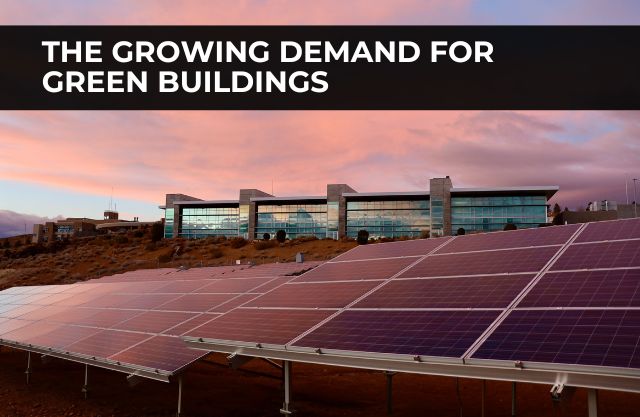
The Growing Demand for Green Buildings

Globally and locally, the demand for environmentally responsible properties is on the rise. Green buildings are not only preferred by eco-conscious tenants but are also becoming a regulatory expectation.

  1. Tenant and Investor Preferences
    Studies show that tenants are willing to pay a premium for properties with sustainable features, including solar energy. Green building certifications, such as EDGE or Green Star, can further enhance a property’s appeal and value.
  2. Government Incentives and Compliance
    In South Africa, regulatory frameworks and incentives support the adoption of renewable energy. Solar systems can help property owners meet energy compliance requirements while benefiting from potential tax incentives or rebates, making these installations a financially prudent choice.

Solar Energy: A Strategic Investment for Property Owners

For commercial property owners, solar energy installations are more than an operational upgrade—they’re a strategic investment in long-term value creation.

  • Higher Resale Value: Properties equipped with solar systems typically sell for more than non-solar properties due to lower utility costs and future-proofing against energy price hikes.
  • Enhanced Tenant Retention: Tenants value the operational savings and sustainability credentials of solar-equipped spaces, reducing turnover and vacancy rates.
  • Positive Brand Perception: Solar installations reinforce a property’s position as a leader in sustainability, attracting forward-thinking businesses as tenants or buyers.

Partnering with S.M.E.I. Renewables for Solar Success

S.M.E.I. Renewables specialises in transforming commercial properties into sustainable, energy-efficient assets. Our tailored solar solutions not only reduce electricity costs but also enhance property value and marketability.

From solar carports to advanced energy storage systems, we work with property owners to maximise returns on their solar investments. Whether you’re retrofitting an existing property or incorporating solar into a new development, our expertise ensures that your project delivers financial and environmental impact.

Investing in a Greener Future

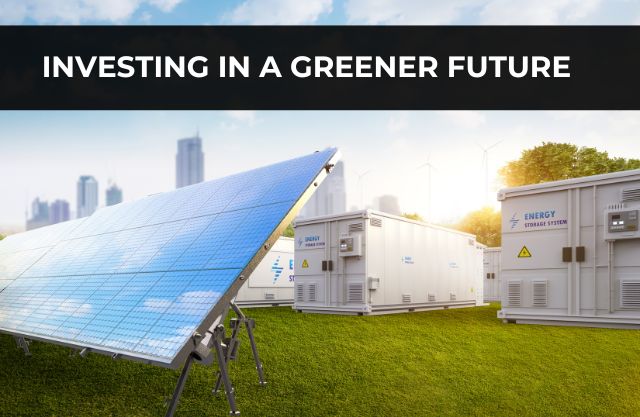
Conclusion: Investing in a Greener Future

Solar energy is no longer just a cost-saving measure—it’s a way to unlock additional value for commercial properties. As South Africa’s property market evolves, staying ahead of tenant and investor demands requires innovative solutions like solar energy.

Contact S.M.E.I. Renewables today to explore how solar installations can enhance your property portfolio and position your business for sustainable growth.


Maximise Your Solar Investment: Energy Storage for Commercial Spaces

Maximise Your Solar Investment: Energy Storage Solutions for Commercial Spaces

As more South African businesses turn to solar energy to reduce costs and improve sustainability, the conversation is evolving from energy generation to energy storage for commercial spaces. Solar energy is an excellent solution for harnessing the power of the sun, but without an effective way to store that energy, businesses might not fully realise the benefits. With the increasing demand for reliable energy due to load shedding and rising electricity costs, energy storage systems are becoming an essential part of solar installations.

Energy storage solutions, such as battery systems, allow businesses to store excess solar energy for use when it’s needed most—during peak demand periods, at night, or in the event of power outages. In this blog, we’ll explore the different types of energy storage systems available, how they provide cost savings, and how they contribute to long-term energy resilience.

The Importance of Energy Storage for Commercial Spaces

The Importance of Energy Storage for Commercial Spaces

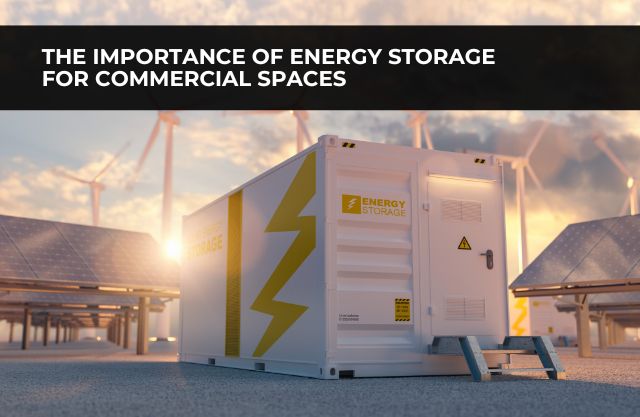
South Africa’s frequent load shedding has made energy reliability a pressing concern for businesses. While solar energy generation can help businesses reduce their reliance on the national grid, there is a growing need to ensure that the energy produced is available even when the sun isn’t shining. This is where energy storage comes in.

Energy storage systems allow businesses to capture and store excess solar energy during the day, which can then be used during periods of low solar production or high energy demand. This capability ensures uninterrupted operations during grid outages and helps businesses avoid costly peak electricity rates. Energy storage also offers long-term stability by enabling businesses to manage their energy supply more effectively and reduce dependency on Eskom’s unreliable grid.

Types of Energy Storage Systems for Businesses

There are several energy storage options available to commercial spaces, each offering unique advantages based on a business’s needs and energy usage patterns. Here are the most common types of energy storage systems businesses can consider:

  1. Lithium-Ion Battery Systems

Lithium-ion batteries are the most popular and widely used energy storage solution, particularly for commercial and industrial applications. These batteries have a high energy density, meaning they can store large amounts of energy in a compact form. They also have a longer lifespan compared to other battery types, making them a cost-effective solution in the long run.

Lithium-ion batteries are well-suited for businesses with high energy demands or those that experience frequent load shedding. Their efficiency allows them to store solar energy during the day and release it as needed, ensuring that critical operations can continue without disruption.

  1. Hybrid Energy Storage Systems

Hybrid energy storage systems combine different energy sources, such as solar power and grid electricity, to provide a seamless power supply. These systems allow businesses to switch between solar energy, battery storage, and grid electricity depending on the time of day or energy demand.

For example, during peak solar production, hybrid systems can store excess energy in batteries and use it later when solar generation is low. If the battery runs out, the system can switch to grid electricity. Hybrid systems offer flexibility, ensuring that businesses can always access power, even during load shedding or periods of high energy usage.

  1. Lead-Acid Battery Systems

Lead-acid batteries are an older technology but still widely used in certain commercial applications due to their lower upfront cost. While they don’t offer the same energy density or lifespan as lithium-ion batteries, they can be a viable option for smaller businesses or those with limited budgets.

Lead-acid batteries are most effective for businesses with lower energy demands, where energy storage is needed primarily for short-term backup power during outages rather than for long-term use. However, as lithium-ion technology continues to advance, many businesses are transitioning to this more efficient and longer-lasting alternative.

Backup Power and Cost Savings: The Dual Benefits of Energy Storage

Backup Power and Cost Savings: The Dual Benefits of Energy Storage

One of the primary benefits of energy storage is the ability to provide backup power during outages. In South Africa, where load shedding has become a persistent issue, businesses need reliable energy solutions to keep operations running smoothly. Energy storage systems ensure that solar-generated energy is available even when the grid is down, providing a critical safety net for businesses that rely on continuous power.

Additionally, energy storage systems offer significant cost-saving benefits. By storing energy during off-peak times (when electricity rates are lower) and using it during peak demand periods (when rates are higher), businesses can avoid costly utility charges. This strategy, known as “peak shaving,” helps businesses lower their electricity bills and improve their overall energy efficiency.

For businesses with solar installations, energy storage maximises the return on investment (ROI). By storing excess solar energy, businesses can reduce their reliance on grid electricity, leading to long-term savings on energy costs. With energy prices in South Africa continuing to rise, energy storage systems provide businesses with a way to hedge against future price increases and ensure energy cost stability.

Energy Storage and Long-Term Energy Resilience

In addition to cost savings and backup power, energy storage systems play a crucial role in building long-term energy resilience. As South Africa’s energy landscape becomes increasingly unpredictable, businesses need solutions that allow them to take control of their energy supply and avoid disruptions caused by grid instability.

Energy storage systems enable businesses to become more energy independent by reducing their reliance on Eskom’s fluctuating supply. With a reliable energy storage system in place, businesses can manage their energy more effectively, store power when it’s plentiful, and use it when it’s scarce. This autonomy ensures that businesses are better equipped to handle power outages, price fluctuations, and future energy challenges.

Moreover, as South Africa continues to embrace renewable energy initiatives, businesses that invest in energy storage will be well-positioned to meet future energy regulations and sustainability targets. By adopting energy storage solutions today, businesses can future-proof their operations, enhance energy security, and contribute to the country’s renewable energy goals.

S.M.E.I. Renewables: Your Partner in Energy Storage Solutions

S.M.E.I. Renewables is committed to providing businesses with cutting-edge solar and energy storage solutions that ensure long-term energy resilience. Whether you’re looking to add energy storage to your existing solar system or explore a new solar installation with integrated storage, we offer tailored solutions designed to meet your specific energy needs.

Our team will work with you to assess your energy usage, design a customised energy storage system, and ensure seamless integration with your current operations. By investing in energy storage, you’re not just safeguarding your business from load shedding—you’re also maximising the value of your solar investment and positioning your company for long-term sustainability.

Take Control of Your Energy with Storage Solutions

Conclusion: Take Control of Your Energy with Storage Solutions

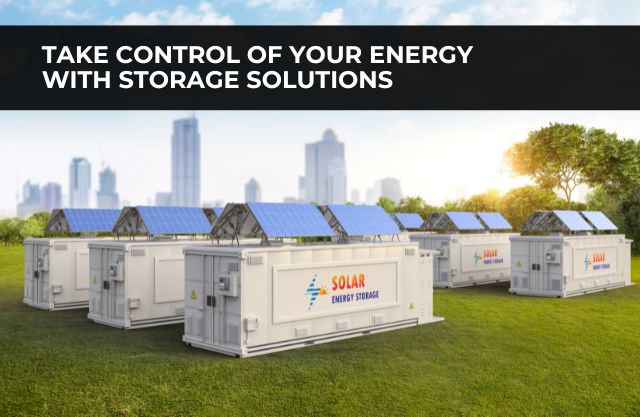
As South African businesses continue to adopt solar energy, the next logical step is to ensure that this energy can be stored and used when it’s needed most. Energy storage solutions provide businesses with backup power during outages, significant cost savings, and long-term energy resilience.

Whether you opt for lithium-ion batteries, hybrid systems, or other storage technologies, the benefits are clear: reduced energy costs, greater control over energy consumption, and increased independence from an unstable grid. As businesses across South Africa seek ways to future-proof their operations, energy storage is becoming an indispensable part of the solution.

To learn more about how energy storage can benefit your business, contact S.M.E.I. Renewables today for a customised consultation.