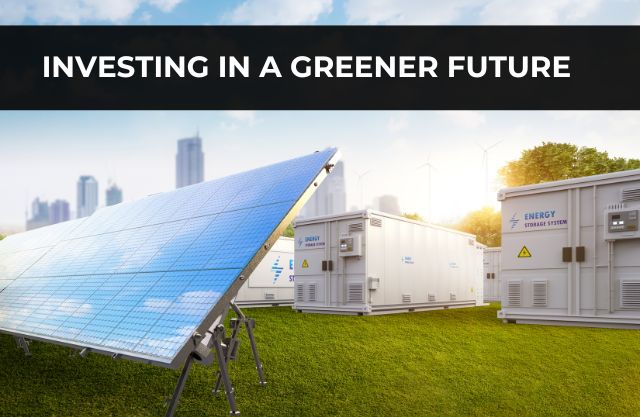

2025 has been a defining year for commercial and industrial solar development. For many businesses, it was the year that energy strategy shifted from short-term crisis response to long-term structural change. Across Africa, and globally, organisations have invested in higher-efficiency systems, integrated storage, digital optimisation and smarter project delivery. The result? Solar is no longer a “nice to have”; it has become core infrastructure.
This 2025 solar industry review breaks down the standout trends, lessons, and direction-setting innovations that shaped the year and what they mean for the future of large-scale solar development.
- System Efficiency Took a Major Leap Forward
If there’s one headline from 2025, it’s efficiency.
Commercial and industrial installations benefited from:
- Bifacial panels, increasing yield on constrained rooftops and ground-mount sites.
- High-efficiency PV modules regularly reaching 20–25% conversion.
- Perovskite-silicon tandem technology, pushing beyond 30% efficiency in test environments, signalling what the next generation of commercial panels will deliver.
For South African businesses where space is often the limiting factor, retail centres, logistics hubs, warehouses, efficiency gains directly translated into better project economics and higher output per square metre.
- Battery Storage Became Standard, Not Optional
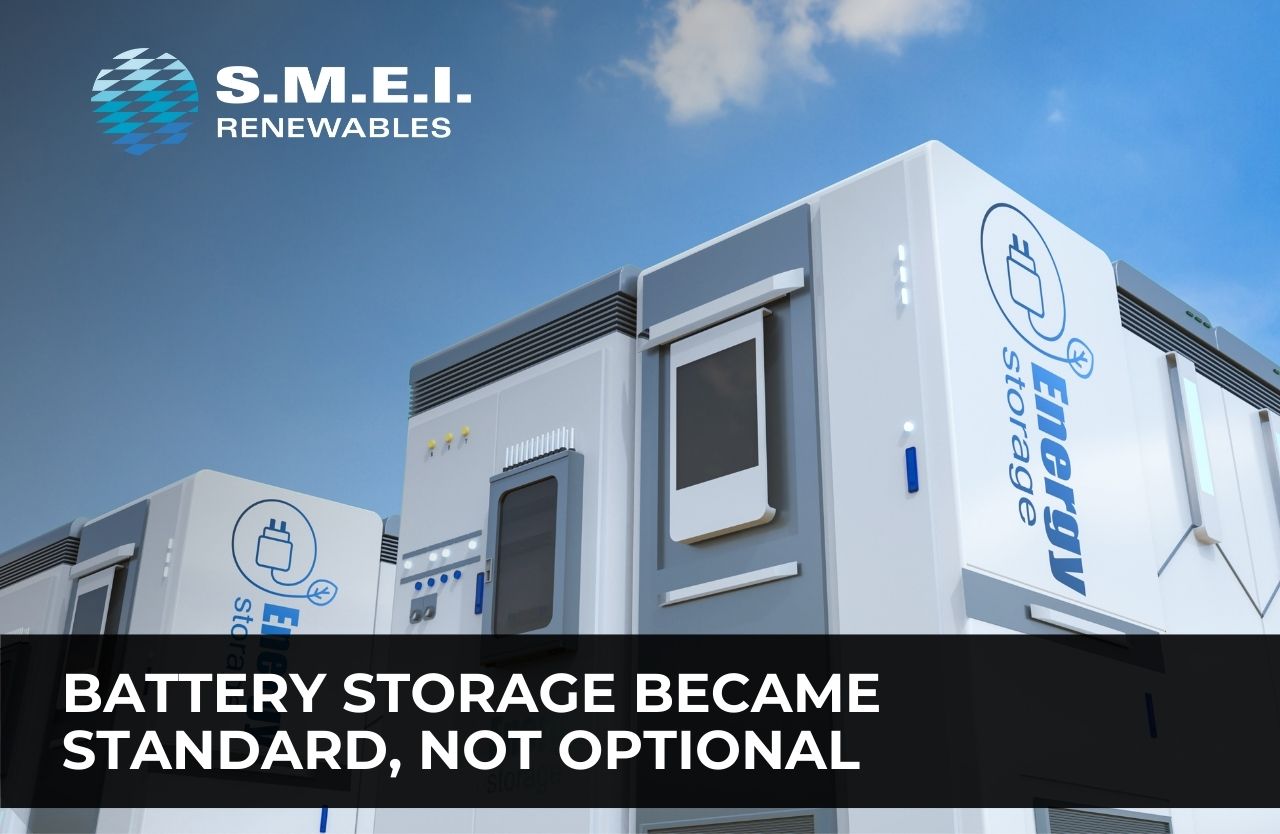
Falling battery prices finally hit a tipping point in 2025.
The commercial sector saw:
- Lower lithium-ion costs
- Wider adoption of hybrid systems
- Strong uptake of storage for backup power, peak shaving, and load shifting
Industrial operations used storage to stabilise production schedules, while businesses with large daytime loads pushed further into grid-independent operating models.
Storage is no longer something companies “add later”. In 2025, it became integral to design from day one.
- Smart Energy Systems Matured and Started Saving Real Money
AI-driven energy management systems were one of the biggest quietly transformative shifts of the year.
These systems now:
- Forecast load with surprising accuracy
- Optimise energy flows across solar, battery and grid
- Reduce waste and extend component lifespan
- Lower operational costs in measurable ways
For multisite operators, manufacturers and commercial complexes, the ability to manage energy like any other strategic asset is now a competitive advantage.
- Regulations Shifted and Accelerated Solar Uptake
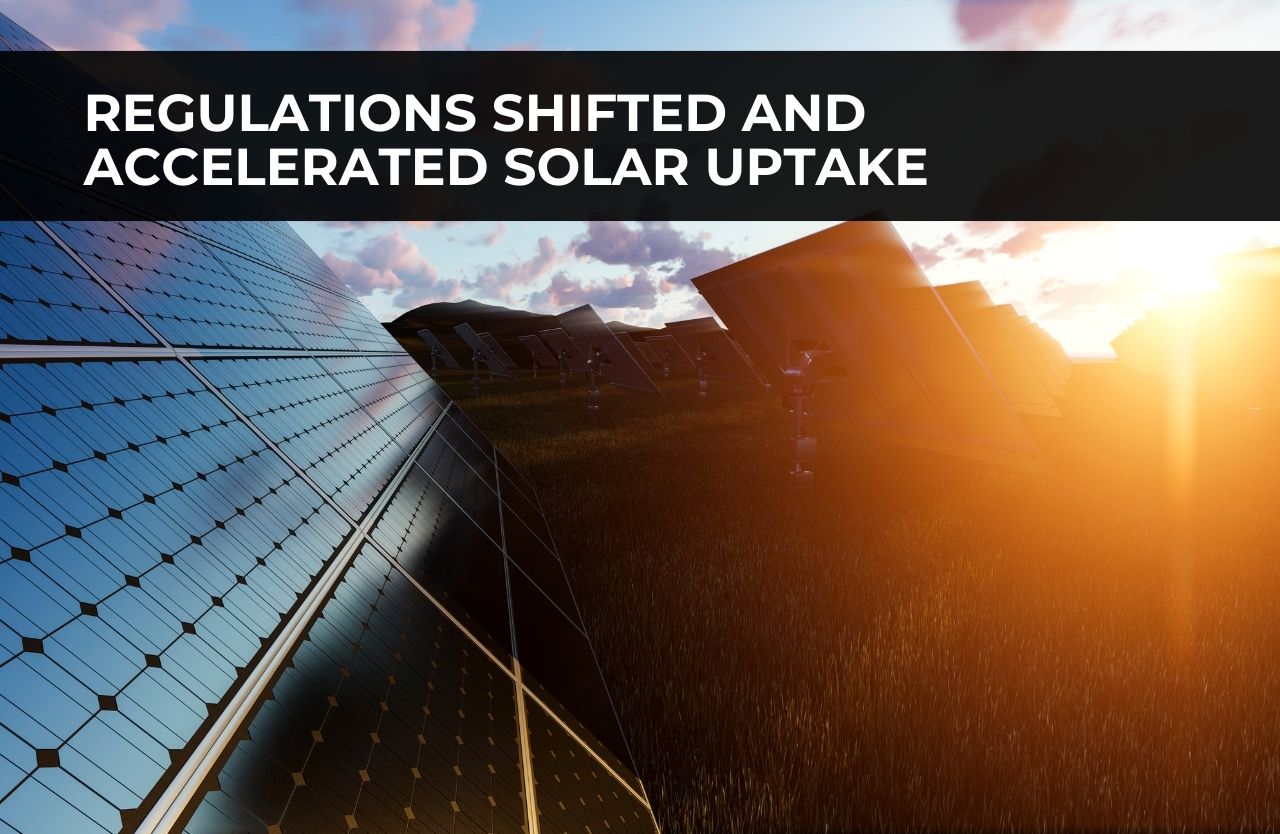
Across markets, policy played a decisive role in 2025.
South Africa saw steady movement on renewable energy targets, easing the path for commercial adoption, particularly behind-the-meter installations that reduce strain on the national grid.
Globally, policy momentum surged:
- The US Inflation Reduction Act reshaped solar manufacturing and drove unprecedented capacity expansion.
- Markets in Europe, Asia and Latin America hit new installation records.
- Net-zero planning requirements pushed companies to invest sooner rather than later.
Regulation didn’t just support solar, it pushed it forward.
- Solar Microgrids Became the New Backbone for Energy Resilience
One of the most important lessons of 2025 was the shift toward localised energy autonomy.
Solar microgrids grew significantly, especially in:
- Industrial parks
- Agriculture clusters
- Mining towns
- Remote commercial precincts
- Mixed-use developments
These systems provided:
- Islanding capabilities
- Greater operational certainty
- Independence during grid failures
- Long-term cost control
In South Africa, where grid instability remains a reality, microgrids strengthened business continuity strategies in a way no other technology currently can.
- New Applications Expanded the Definition of “Solar Project”
2025 was also the year commercial and industrial solar stepped beyond conventional rooftops.
Notable growth areas included:
- Floating solar, especially on engineered reservoirs, cooling effects improved production while reducing land conflict.
- Solar-powered mobility prototypes, advancing EV integration.
- Shared solar and storage models, enabling net-zero communities.
- Ground-mounted systems with trackers, improving yield and supporting large-scale energy users.
These applications highlighted a key shift: solar is evolving from isolated assets into interconnected energy ecosystems.
- Cost Reductions Came from Technology, Automation and Better Engineering
Businesses benefited from meaningful cost reductions driven by real technological innovation:
- Robotic panel manufacturing improved reliability and lowered labour costs.
- AI-based remote site assessments reduced time and engineering hours.
- Thinner silicon slicing techniques reduced material waste.
- Modular, pre-engineered system components sped up installation and improved standardisation.
All of this meant faster deployment, more predictable timelines and better value for commercial clients.
- The Biggest Lesson: Integration Is Everything
The threads tying 2025 together, efficiency, storage, smart systems, microgrids, policy momentum, point to a clear outcome:
Solar projects succeed when the engineering, construction, storage, controls and long-term operational strategy work as one integrated system.
This is where S.M.E.I. Renewables continues to lead:
- Full EPC capability
- Multi-discipline engineering
- Structural and mechanical expertise
- System integration
- Long-term maintenance and monitoring
- Proven commercial and industrial delivery across Africa
As commercial energy needs evolve, integrated delivery is what turns a solar installation into a durable, high-performance asset.
Looking Ahead: The Commercial Solar Outlook Beyond 2025
The sector enters 2026 with strong momentum:
- Efficiency gains will continue.
- Storage will become cheaper and more widespread.
- Smart controls and microgrids will define the next generation of commercial energy systems.
- Businesses will increasingly prioritise resilience, operational certainty, and long-term cost stability.
And across South Africa and the broader continent, solar will remain a cornerstone of energy security, industrial growth and commercial competitiveness.
S.M.E.I. Renewables will continue supporting clients with engineered, future-focused solutions, building systems that last, perform and deliver measurable value for decades.
Sources: