Ground-mounted solar offers South African mines and factories the scale, flexibility, and electrical performance that rooftops simply can’t match. With rising tariffs, escalating carbon tax, and a grid that – while improving – remains fragile, ground-mount arrays provide the most dependable path to predictable costs and higher uptime, especially when combined with single-axis trackers and storage. Real-world examples underline this point: a platinum mine in Rustenburg exploring a 54 MW plant, Heineken’s tracker-based brewery installation in Sedibeng, the 148–149 MW Bolobedu project wheeling power to Rio Tinto’s RBM, and B2Gold’s expanded hybrid plant in Mali all demonstrate how engineered ground-mount systems set the benchmark for industrial resilience.
What do we mean by “ground-mounted solar”?
Ground-mounted solar PV is installed on engineered steel or aluminium frames anchored to the ground (piles, screw anchors, or concrete footings). Unlike rooftops, orientation, tilt, row spacing, and DC sizing can be optimised for energy yield and O&M access. Utility-scale designs are typically either fixed-tilt or single-axis tracking (panels follow the sun east-to-west for 10–30%+ more energy depending on site). In modern utility PV, single-axis trackers with bifacial modules are the global default because they improve capacity factor and lower LCOE(Levelized Cost of Electricity); NREL’s cost and benchmarking work treats single-axis tracking as the representative utility configuration.
In Southern Africa’s latitudes and clear-sky conditions, measured studies show single-axis tracking delivering roughly 15–35% more energy than fixed-tilt systems—one reason tracker structures are increasingly standard for industrial ground-mounts.
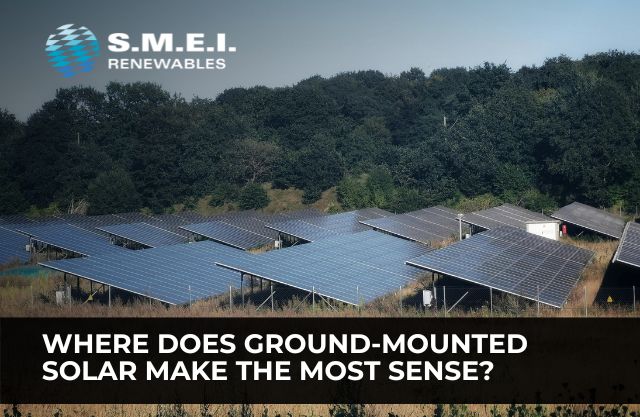
Where does ground-mounted solar make the most sense?
Mines and heavy industry are textbook candidates:
- High daytime loads with space on the ground. Plants, pits, tailings precincts, and buffer zones typically offer land where roof options are structurally limited or shaded. A Northern Cape analysis quantified the large technical potential on land already licensed to mining, within SA’s strong solar resource.
- Grid risk and tariff exposure. NERSA approved Eskom tariff hikes of 18.65% (FY 2023/24) and 12.74% (FY 2024/25), with a further 12.74% increase implemented in 2025—material for any energy-intensive operation. Even as the utility’s recovery has delivered long stretches without load-shedding since 15 May 2025, industrial users still need on-site resilience.
- Carbon tax and ESG pressure. South Africa’s carbon tax started in 2019 (headline rate R120/tCO₂e, escalating with inflation; the 2025 rate guidance is R236/tCO₂e), with a tightening structure expected post-2026—strengthening the financial case for on-site renewables and wheeling PPAs.
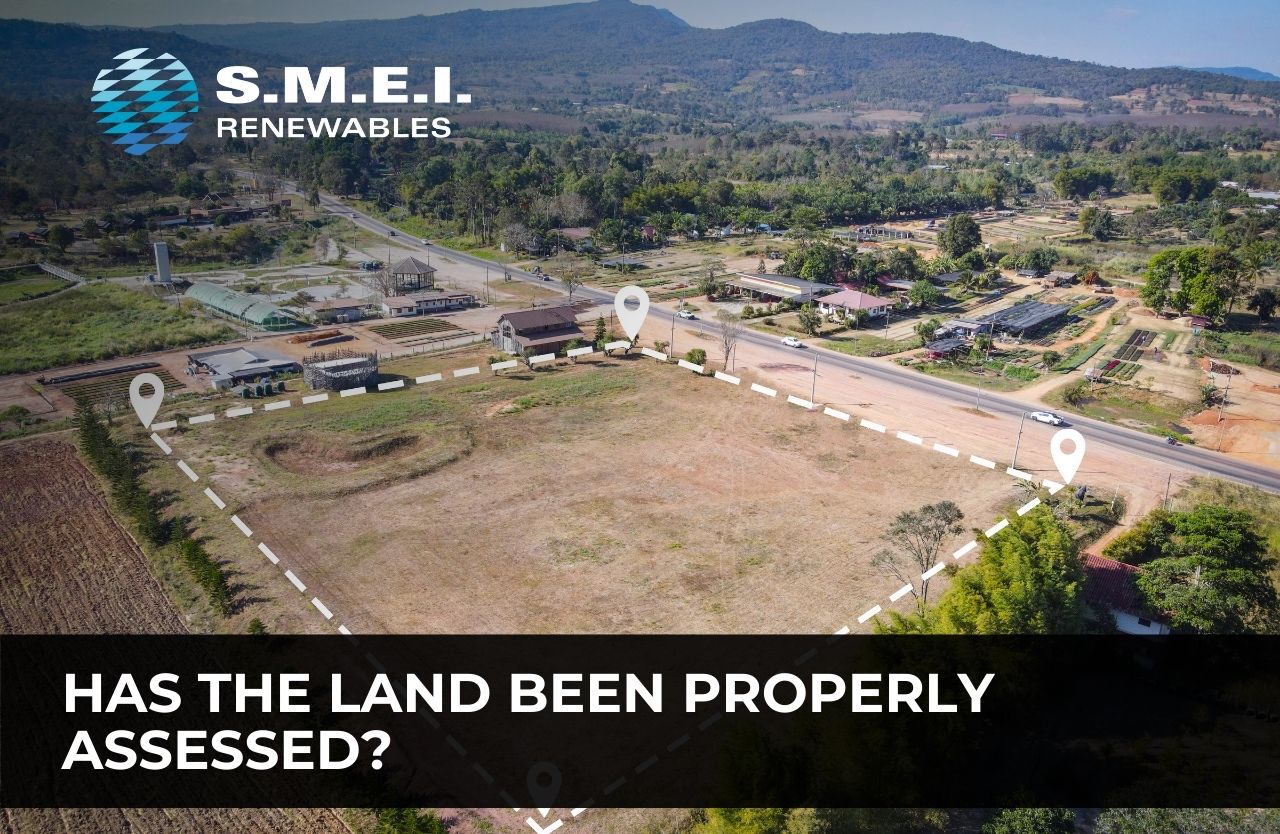
Typical land take: International benchmarks suggest 5–7 acres per MW (≈2–3 ha/MW) for utility PV, varying with technology, spacing, and latitude; empirical datasets show medians around 2.8-4.2 acres per MWDC (MegaWatts Direct Current) for fixed vs tracking systems. Siting in disturbed or buffer land helps minimise land-use conflicts.
Why ground-mounted systems are the resilience play for SA industry
- Scale & shape to the load
Large DC fields (often with DC/AC ratios near ~1.3) allow you to size for daytime process loads, reduce peak imports, and create room for DC-coupled storage later. NREL’s utility PV assumptions highlight single-axis tracking with ILR ≈1.3 as standard for high-yield plants.
- Predictable long-run energy costs
Once built, solar has no fuel cost. A platinum-sector case study in Rustenburg modelled a 54 MW plant generating 2,439,753 MWh over 20 years with a payback of 5.76 years and R6.18 bn combined savings (electricity + carbon tax) vs Eskom-only sourcing – before even pricing outage risk.
- Tracker-driven yield and process uptime
Trackers produce a broader, flatter output curve that better aligns with industrial daytime operations, increasing self-consumption and cutting peak draws. In South Africa-specific analysis, one-axis tracking typically adds 15-35% energy vs fixed-tilt.
- Grid-support & wheeling flexibility
Where on-site capacity or environmental constraints limit build-outs, off-site ground-mount with wheeling under a PPA can supply your operation via Eskom’s network. Example: Voltalia’s ~148–149 MW Bolobedu plant will wheel ~300 GWh/year to Rio Tinto’s RBM.
Design choices that matter (and why S.M.E.I. Renewables gets them right)
Fixed-tilt vs single-axis trackers
- Fixed-tilt wins on simplicity and capex.
- Single-axis trackers win on yield and LCOE in high-irradiance sites, now the utility norm globally thanks to lower tracker costs and higher reliability. NREL shows the dominance of one-axis tracking in new ground-mounts.
Module selection & electrical ratios
Bifacial modules on trackers plus a sensible inverter loading ratio (≈1.3–1.35) increase delivered MWh and grid-friendly output. (NREL utility PV baselines.)
Geotech, wind and corrosion engineering
Mining sites can mean variable soils, corrosive atmospheres, and gusty winds around plant structures. Field research on tracker wind loads and structural coefficients underlines the need for site-specific structural design and QA.
Soiling & O&M
Dust is real – especially near crushers, haul roads and smelters. Reviews and South African industrial field studies show material performance losses without cleaning regimes; design spacing, access roads, module tilt, and water logistics must be planned up-front.
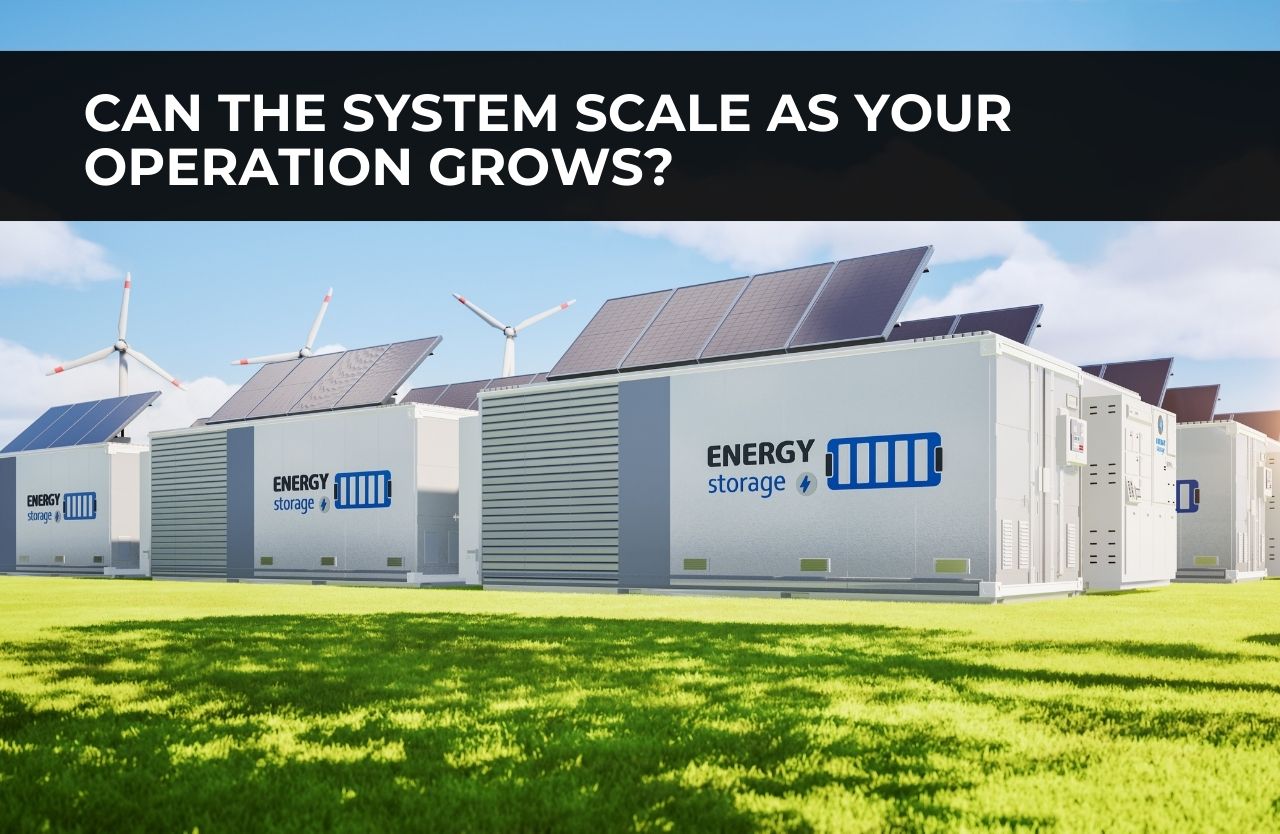
Storage & hybridisation
Industrial resilience improves further with batteries (frequency support, ride-through, peak shaving), or with hybridised systems (solar + HFO/diesel) in remote mines – see Fekola below.
What it looks like in practice: five quick case snapshots
- Rustenburg platinum mine – 54 MW on single-axis trackers (modelled)
A peer-reviewed techno-economic study compared “Eskom-only” vs adding 54 MW of PV on trackers over 20 years. Results: 2.44 TWh generated; R5.61 bn electricity savings; R563 m carbon-tax savings; IRR ~21%; payback 5.76 years. The authors note additional benefits if load-shedding avoidance were monetised.
- Heineken Sedibeng, Gauteng – 6.5 MW trackers next to the brewery
A ground-mounted 6.5 MW tracker plant with ~14,000 modules powers brewery operations via the Eskom network; published project data cites significant CO₂ reduction over life and local jobs during the seven-month build. This is a strong model for solar for factories with adjacent land.
- Bolobedu Solar (Limpopo) – ~148–149 MW wheeled to Rio Tinto RBM
A corporate PPA will wheel ~300 GWh/year from a large ground-mount plant to RBM’s smelting/processing facilities—illustrating how off-site ground-mount plus wheeling secures industrial supply at scale.
- B2Gold Fekola, Mali – now ~52 MW solar + 27.7 MWh storage (hybrid)
The Phase-2 expansion added 46,200 panels and 22 MW solar, taking the plant to ~52 MW PV and boosting storage to 27.7 MWh. The hybrid now supplies up to ~30% of the mine’s electricity and cuts HFO burn dramatically—proof that ground-mounted solar + storage performs in heavy, 24/7 mining.
- Local supply chain for ground-mount structures
South African manufacturers have delivered modular ground-mount structures to Northern Cape mines – shortening lead times and simplifying spares and QA.
Procurement & finance options that de-risk execution
- On-balance-sheet EPC (fastest control; benefit from depreciation).
- Corporate PPA (on-site or off-site with wheeling): lock in tariff paths, shift capex off balance sheet, and hedge carbon-tax exposure. RBM/Voltalia’s 20-year PPA is a useful precedent.
- Hybrid plant upgrades to existing diesel/HFO for remote mines—common across Africa (see Fekola).
To give businesses confidence that their investment will perform as promised, we build clear performance guarantees into every project. These cover the amount of energy the system is expected to deliver, how reliably the trackers operate, how often the panels will be cleaned, and how quickly any issues will be resolved. In practice, that means you’re not just buying a solar plant – you’re securing a long-term commitment to predictable energy output and responsive support.
What “good” looks like: technical checklist for industrial sites
- Layout that respects haul routes, blast zones, tailings expansions, and stormwater.
- Tracker structures with wind-tunnel-informed design; corrosion protection to ISO/ASTM equivalents; foundation types matched to geotech.
- Electrical integration (MV/HV intertie, protection, SCADA, EMS) sized for export limits and load-following. (NREL’s utility PV baselines show modern tracker + bifacial + ILR practices.) ATB
- O&M plan for dusty environments: data-driven cleaning, access, water, and waste-water handling; vegetation and erosion control; spares; tracker greasing schedules.
- Compliance & permits coordinated early (environmental, water, heritage, land-use, grid-code).
- Commercial: PPA or self-gen financial model that prices carbon-tax and outage avoidance alongside tariffs.
FAQs
How much land do I need?
Rule-of-thumb: ~2–3 ha/MW (5–7 acres/MW), depending on site, technology, and spacing. Tracking often needs a little more per MW than fixed-tilt. Use detailed yield modelling to avoid over- or under-spacing.
Will trackers stand up to wind and dust?
Yes – when designed and certified correctly. Industrial studies measure tracker wind load effects and inform structural coefficients; pair that with a robust soiling-mitigation plan and cleaning logistics.
Is on-site solar still worth it if load-shedding is easing?
Eskom’s recovery has been encouraging (no load-shedding since 15 May 2025 at time of writing), but price risk and carbon-tax exposure remain—and resilience means owning a portion of your supply. Many industrials now combine on-site solar with an off-site wheeled PPA.
Why S.M.E.I. Renewables
S.M.E.I. Renewables is a competent, renowned contractor for EPCM’s in the industrial and mining sectors. We procure, install and commission:
- Ground-mounted solar (fixed-tilt and tracker structures)
- Energy storage and hybrid integration (EMS/SCADA; MV/HV tie-in)
- Solar carports (where rooftop/ground footprints are constrained)
Backed by S.M.E.I.’s EC&I heritage, we manage the entire lifecycle – from feasibility studies to civil/structural works, MV/HV connection, protection and commissioning. (Ask us for our standard industrial specification and QA packs.)
Conclusion
For South African mines and factories, ground-mounted solar is the practical backbone of energy resilience. It scales to industrial loads, lowers long-run energy costs, hedges tariff and carbon-tax risk, and – paired with trackers and storage – supports process uptime. With proven case studies across the region and procurement models that fit real balance sheets, the question is no longer if but how fast to deploy.
S.M.E.I. Renewables supplies and installs ground-mounted solar (including trackers), storage, and complete electrical integration across Southern Africa – plus solar carports where your space demands it. If you’re planning capacity for 2026-2028, now is the time to scope, permit and procure.