

Introduction
Throughout history, innovation and progress have often been a two-way street between South Africa and the rest of the world. In some cases, South Africa has been the trailblazer pioneering breakthroughs that later spread globally. In other cases, ideas born internationally have been adopted and advanced within South Africa. This dynamic interplay is evident across diverse fields, from medicine and technology to energy and policy. In this blog, we explore several notable examples of this exchange, focusing on which came first – whether South Africa led with a first-of-its-kind innovation that influenced the world, or whether South Africa leaned on concepts pioneered elsewhere, adapting them to local needs. Each example illustrates how knowledge and innovation transcend borders, ultimately benefiting global society.
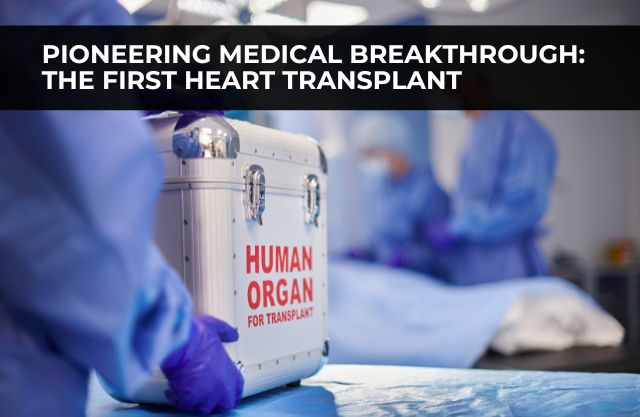
Pioneering Medical Breakthrough: The First Heart Transplant
One of the most famous examples of South African innovation influencing the world is the first human heart transplant. On December 3, 1967, Dr. Christiaan Barnard and his team in Cape Town performed the world’s first human-to-human heart transplant at Groote Schuur Hospital. This groundbreaking operation in which patient Louis Washkansky received a donor heart stunned and inspired the global medical community. Notably, the surgical techniques Barnard used had been developed by researchers in the United States during the 1950s. In other words, the idea of transplanting a heart was born abroad (pioneered by Dr. Norman Shumway’s experiments at Stanford, among others), but South Africa was the first to turn that idea into reality on a human patient. The successful surgery, although the patient survived only 18 days, proved that heart transplantation was possible and paved the way for improvements in immunosuppressive therapy in the 1970s. After this South African first, heart transplants gradually became viable around the world as surgical techniques and anti-rejection drugs improved. Dr. Barnard’s feat influenced cardiac surgery globally – by the late 1970s, many patients worldwide lived years with transplanted hearts, an outcome made possible in part by the trail first blazed in Cape Town. This example shows how a medical idea originating elsewhere achieved its first full realisation in South Africa, sparking a leap forward internationally.
Revolutionising Telecom: Prepaid Mobile Phones
In the 1990s, South Africa again took the lead in innovation – this time in telecommunications – with the advent of prepaid mobile phone service. The concept of prepaid cell service (pay-as-you-go mobile plans) arose globally as a way to extend phone access to those without credit or bank accounts, and early trials were conducted in the United States and Europe in the early 1990s. However, it was South African operator Vodacom that became the first network in the world to launch a successful prepaid mobile product. In November 1996, Vodacom introduced its “Vodago” prepaid package using an intelligent network platform that allowed real-time billing of airtime. This innovation proved transformative – by eliminating the need for contracts or credit checks, it opened mobile access to millions of new customers. The impact was immediate: Vodacom’s prepaid service led to a dramatic surge in mobile uptake in South Africa, and it earned a “Best GSM Service” award from the GSM Association in 1998 for this world-first achievement.
The success in South Africa quickly inspired operators around the globe. By the late 1990s, the prepaid model had been copied in virtually every country in Europe and beyond, rapidly becoming the dominant mode of mobile service in many markets. In developing countries especially, pay-as-you-go plans soon accounted for the overwhelming majority of mobile subscriptions. What began as a South African first – informed by earlier international ideas on broadening phone access – ended up revolutionising the global telecom industry. Today, prepaid mobile options remain a staple worldwide, highlighting how an innovation implemented first in South Africa helped accelerate global connectivity.

Leading Climate Action: South Africa’s Just Energy Transition
In recent years, South Africa has also been at the forefront of innovative climate and energy policy in ways that both draw on global ideas and set new precedents. Globally, the urgency of transitioning to renewable energy has been driven by international scientific consensus and agreements. For instance, the International Renewable Energy Agency (IRENA) reports that total renewable power capacity worldwide surged from about 1,700 GW in 2014 to nearly 3,870 GW in 2023 – a reflection of rapid global adoption of wind, solar, and other clean technologies. This momentum aligns with calls from bodies like the IPCC for a drastic emissions reduction by 2030. South Africa, historically reliant on coal for roughly 80% of its electricity, has been under pressure to shift course as part of this global energy transition.
South Africa’s response drew inspiration from international climate finance concepts but also broke new ground. At the UN COP26 climate conference in 2021, President Cyril Ramaphosa announced the Just Energy Transition Partnership (JETP) – a landmark deal in which a coalition of major nations (France, Germany, the UK, the US, and the EU) pledged an $8.5 billion package to support South Africa’s shift from coal to renewable energy. This JETP was hailed as a “first-ever, internationally applauded decarbonisation programme” – essentially a pilot model for how a developed-developing country partnership could facilitate a fair energy transition in a coal-dependent, middle-income economyecdpm.org. In this case, the idea of developed countries financing developing nations’ green transition was discussed globally for years, but South Africa became the first to implement it at scale, crafting a country-led plan to retire coal plants in exchange for climate finance. The influence has been immediate: South Africa’s JETP has become a template for other nations. By 2022-2023, similar partnership deals were announced for Indonesia ($20 billion) and Vietnam ($15.5 billion), among others, with lessons explicitly being drawn from South Africa’s experience as the first JETP recipient. In short, South Africa leaned into a global climate idea and turned it into an actionable program that is now guiding other countries’ transitions.
South Africa’s leadership in renewable energy isn’t limited to finance. The country also pioneered a competitive approach to procuring green power. In 2011, the government launched the Renewable Energy Independent Power Producer Procurement Programme (REIPPPP) to attract private investment in wind, solar, and other renewables. This initiative was introduced at COP17 in Durban and aimed to diversify South Africa’s coal-heavy energy mix in line with global climate commitments. By 2023, REIPPPP had successfully commissioned about 6,200 MW of renewable capacity (around 5% of South Africa’s supply) and mobilised R256 billion in private investment. Despite some delays, the program’s early rounds were so successful and transparent that REIPPPP came to be viewed as a model for other African nations looking to develop renewables. In fact, much of the anticipated growth in South African power over the next decade – nearly 9 GW of new capacity by 2032 – is expected to come from non-hydro renewables driven by REIPPPP and policy reforms. Here again, global ideas (like renewable auctions and feed-in tariffs, pioneered in countries such as Brazil and Germany) informed South Africa’s approach, but South Africa’s execution in the African context set an example that has influenced energy policy across the continent.
Conclusion
From these examples, a clear picture emerges: innovation is a global conversation, and South Africa has been an active and sometimes leading voice. When South Africa has been first – whether transplanting a human heart or rolling out prepaid mobile telephony – it has often demonstrated what is possible, providing a proof of concept for the rest of the world. Conversely, when South Africa has adopted ideas originating elsewhere – be it surgical techniques, telecom solutions, or climate finance models – it has added its own momentum and adaptations, showing how global concepts can take root in local soil. The exchange has enriched both sides. South African breakthroughs have saved lives and connected people worldwide, while international innovations have helped South Africa address local challenges from healthcare to energy. This continual exchange underlines our shared progress: what starts in one place can inspire many, and tackling big challenges often requires learning from each other’s firsts. In a rapidly changing world, the story of global and South African innovation reminds us that leadership in ideas knows no fixed address – it belongs to all who are prepared to pioneer and to learn, regardless of where they stand on the map.
Sources
- History.com Editors. “First human heart transplant.” History, updated May 27, 2025 history.comhistory.com.
- Wikipedia. “History of prepaid mobile phones” (section on early implementations) en.wikipedia.orgen.wikipedia.org.
- Statzon Insights (via IRENA data). “IRENA’s Report Calls for a Tripled Renewable Power Capacity by 2030.” Karri Takki, May 2, 2024 statzon.comstatzon.com.
- EngineerIT. “CSIR releases 2022 statistics on power generation in SA,” Feb 23, 2023 engineerit.co.zaengineerit.co.za.
- U.S. Trade.gov. “South Africa – Energy (Country Commercial Guide),” last published Jan 26, 2024trade.govtrade.gov.
- ECDPM. “Two years into South Africa’s Just Energy Transition Partnership: How real is the deal?” Jan Vanheukelom, Nov 27, 2023 ecdpm.org.
- IISD/jetknowledge.org. “Seven Things Indonesia Can Learn From South Africa’s JETP,” Anissa Suharsono, Nov 7, 2023 jetknowledge.org.