
As sustainability moves higher on the corporate agenda, businesses around the world—and in South Africa—are increasingly setting ambitious net-zero carbon for businesses targets. Achieving net-zero means that a company’s greenhouse gas emissions are balanced by removal or offsetting measures, resulting in no net impact on the climate. Solar energy plays a pivotal role in reaching these targets by replacing fossil fuel-based power with clean, renewable electricity, significantly reducing carbon footprints while delivering long-term financial benefits.
What Does Net-Zero Carbon Mean and Why Is It a Priority?
Net-zero carbon is defined as the point at which the total greenhouse gas emissions produced by a business are equal to the amount removed from the atmosphere. This goal has become a business priority for several key reasons:
- Climate Responsibility: With global warming posing serious risks, companies are under increasing pressure from consumers, investors, and regulators to operate sustainably.
- Regulatory Requirements: Governments are introducing stricter environmental regulations and incentives to drive emissions reductions. In South Africa, for example, policies such as the Expanded Section 12B Tax Allowance and various green energy rebates help encourage businesses to invest in renewable energy.
- Corporate Reputation: Achieving net-zero can enhance a company’s brand image, attracting environmentally conscious customers and investors.
- Operational Resilience: By reducing reliance on fossil fuels, businesses can shield themselves from volatile energy prices and supply disruptions.
These factors have led companies to explore renewable energy sources as a critical component of their sustainability strategy.

How Solar Energy and Energy Efficiency Measures Help Achieve Net-Zero
Solar energy is uniquely positioned to support net-zero carbon goals through several mechanisms:
- Reducing Direct Emissions: Solar installations generate electricity without burning fossil fuels, directly lowering a company’s carbon emissions. With South Africa’s abundant sunshine—many regions receive over 2,500 hours of sunlight per year—solar energy can meet a substantial portion of a business’s energy needs.
- Offsetting High Energy Demand: Data centres, manufacturing facilities, and other energy-intensive operations can significantly reduce their carbon footprint by using solar power. For example, solar systems integrated with battery storage ensure that even during outages or peak demand periods, operations run on clean energy rather than grid power, which is often generated from fossil fuels.
- Complementary Energy Efficiency: Beyond solar installations, businesses can further lower their carbon footprint by implementing additional energy efficiency measures such as LED lighting, improved insulation, and smart energy management systems.
These measures not only contribute to environmental sustainability but also offer a stable, predictable energy supply and long-term cost savings.
Case Studies: Solar-Powered Journeys to Net-Zero
Several companies around the globe have successfully integrated solar energy into their operations to move closer to net-zero:
- Apple’s Data Centres: Apple’s commitment to 100% renewable energy in its data centres, supported by large-scale solar farms, serves as a benchmark for how tech companies can drastically reduce their emissions while ensuring reliable operations.
- Microsoft’s Azure Facilities: Microsoft is on track to power its Azure data centres with renewable energy by 2025. Solar installations at these centres not only reduce energy costs but also play a key role in minimizing the company’s carbon footprint.
- South African Manufacturers: In South Africa, innovative manufacturing companies are beginning to adopt solar-plus-storage solutions. By supplementing grid power with rooftop solar and integrating energy efficiency measures, these companies are reducing their energy bills and lowering their overall emissions. Although specific case studies are emerging, early adopters report potential energy savings of up to 50% on annual costs, while also significantly cutting carbon emissions.
These examples illustrate that with the right investment, solar energy can be a transformative tool for achieving net-zero carbon targets.
The Broader Impact: Economic and Environmental Benefits
Investing in solar energy not only helps businesses meet net-zero carbon targets but also offers several ancillary benefits:
- Financial Stability: Fixed energy costs from solar installations reduce exposure to rising grid tariffs, leading to improved long-term profitability.
- Resilience: Solar systems with battery storage ensure continuous operations during power outages, a critical advantage in regions where infrastructure challenges persist.
- Enhanced Competitiveness: Companies that adopt renewable energy can differentiate themselves in a competitive market, appealing to investors and consumers who value sustainability.
- Government Incentives: South African businesses can take advantage of government schemes such as the Expanded Section 12B Tax Allowance and various rebate programs, which help reduce the upfront costs of solar installations and improve overall ROI (SANews, SARS Draft Guide).
Looking Ahead: A Sustainable Future Powered by Solar
The journey toward net-zero carbon is not only a moral and environmental imperative but also a strategic business decision. By integrating solar energy into their operations, South African businesses can drastically reduce their carbon footprints, secure reliable and cost-effective power, and position themselves at the forefront of sustainability in the global market.
At S.M.E.I. Renewables, we’re committed to helping businesses implement solar solutions that support their net-zero ambitions. Whether it’s through premium rooftop installations, solar carports, or mobile solar units, our tailored solutions are designed to meet your unique energy needs.
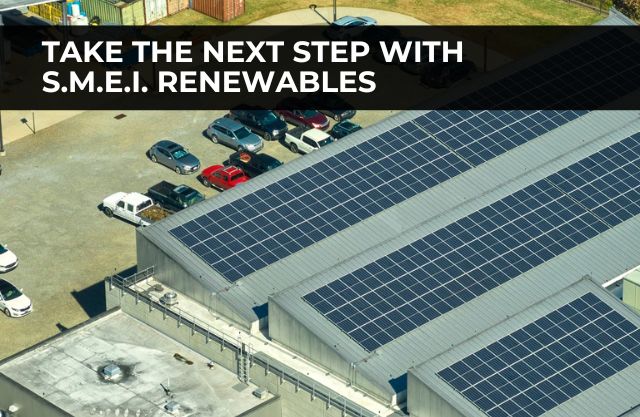
Take the Next Step
Embrace the power of solar energy and join the movement towards a net-zero future. Contact S.M.E.I. Renewables today to learn how our solar solutions can help transform your business operations, reduce your carbon footprint, and secure long-term savings.
Sources:
- International Renewable Energy Agency (IRENA) – Insights on global energy demand and the role of renewables. IRENA
- SANews – Government initiatives and renewable energy incentives in South Africa. SANews
- SARS Draft Guide on Allowances and Deductions – Detailed information on the Expanded Section 12B Tax Allowance. SARS Draft Guide
- BusinessTech & CSIR Reports – Data on energy challenges and operational impacts in South Africa. BusinessTech | CSIR