Lifecycle Performance of Commercial Solar Structures: What Designing for 25 Years Actually Requires

Commercial solar installation engineered for 25-year lifecycle performance

A commercial solar system is not purchased. It is financed. The investment thesis is a 25-year cash flow: energy cost savings and generation revenue against capital repayment, O&M expenditure, and the residual value of the asset at the end of the project term.

That framing changes what ‘good engineering’ means. A structure that meets code at commissioning but requires structural remediation in year eight has not failed a technical standard. It has failed the business case. The cost of remediation access, fabrication, installation, downtime does not appear in any compliance checklist. It appears in the project IRR.

At S.M.E.I. Renewables, we think about what a 25-year performance horizon actually demands from the engineering and installation. This article covers the variables that determine whether a commercial solar structure reaches its design life or falls short of it and what decisions, made early, have the most influence on that outcome.
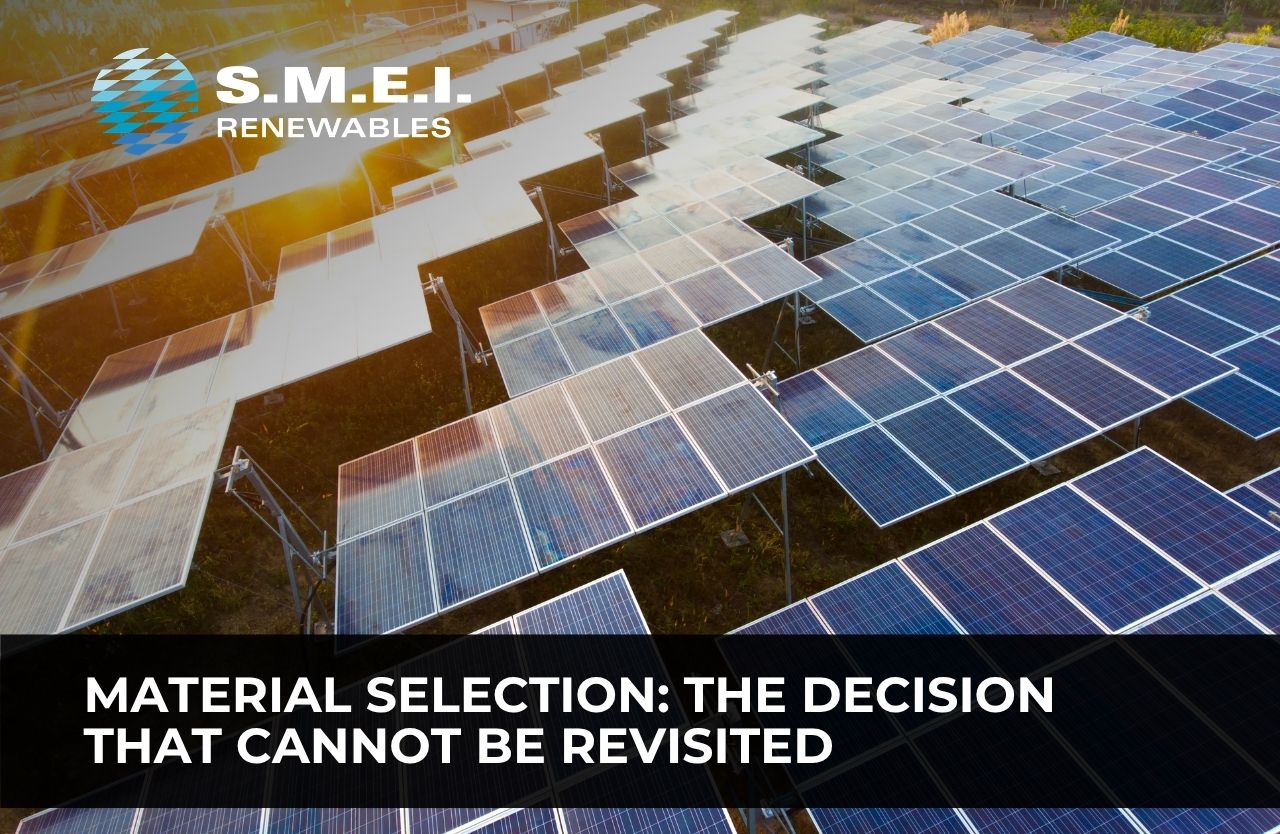
Galvanised steel solar structure built for long-term corrosion resistance

Material Selection: The Decision That Cannot Be Revisited

The structural steel in a commercial solar installation is inaccessible for the vast majority of its operating life. Embedded foundation sections are underground. Column bases are at ground level in a zone of high moisture cycling. Every bolted connection is exposed to the same environmental conditions as the surrounding steel. Once the structure is installed, the scope for corrective intervention is limited. The material selection made at the design stage is largely permanent.

Hot-dip galvanised steel, specified and applied to SANS 121:2011 (aligned with ISO 1461), is the correct base specification for the South African climate across the range of environments where commercial solar projects are developed. But specifying ‘hot-dip galvanised’ is the beginning of a corrosion protection decision, not the end of it.

The variables that determine whether a galvanised structure reaches 25 years without loss of section are:

  • Coating thickness relative to the base steel section, verified at an accredited facility using calibrated electronic gauges.
  • Site corrosion category, assessed against ISO 9223 classification criteria, accounting for proximity to marine environments, industrial emissions, and agricultural chemical use.
  • Below-ground coating treatment, which requires separate specification from above-ground structural elements, standard zinc coatings are often insufficient for aggressive soils.
  • Connection hardware specification, including bolt grade, coating compatibility, and long-term clamping force under repeated thermal cycling.


For sites in South Africa’s coastal zones the Western Cape, KwaZulu-Natal, and Eastern Cape coastlines, marine aerosol introduces chloride loading that accelerates zinc depletion at rates well above inland reference values. A structure designed using inland corrosion assumptions and installed in a coastal C4 or C5 environment will lose protective coating decades ahead of its design life. The remediation path from that outcome, typically abrasive blasting and recoating of in-situ structure, is expensive and disruptive.

Steel section selection also carries long-term consequences. Column wall thickness, weld quality, and connection plate sizing all influence fatigue behaviour under the repeated load cycles that accumulate over 25 years of wind, and thermal expansion. These decisions are made once. They need to be made correctly.

Designing for Extreme Weather: Beyond the Design Load Case

The load case that governs structural design, the maximum wind speed at the design return period, combined with the design dead and imposed loads is not the only loading condition a 25-year structure will experience. It is the condition the structure is explicitly designed to survive. The question that requires more nuanced engineering is how the structure behaves under sub-design loads experienced repeatedly over decades.

South Africa’s wind climate is more varied than early code editions assumed. SANS 10160-3:2019, updated following research at Stellenbosch University, raised the partial safety factor for wind loading from 1.3 to 1.6 to better reflect the country’s dual wind regime: convective gust fronts from summer thunderstorms across the interior, and extratropical cyclone events along the southern and western coasts. A solar structure that was designed to the pre-2019 code on a site in a wind acceleration corridor may have been compliant at installation and under-designed relative to the actual loading environment it will experience.

Thermal loading is a second mechanism that structural designs can underweight. Steel in South Africa’s Highveld and Northern Cape experiences daily temperature swings of 20 to 30 degrees Celsius across much of the year, and seasonal swings that extend well beyond that range. In a long-span solar carport differential thermal expansion generates cyclic stress at every fixed connection point. Over 25 years, this accumulates as fatigue.

The design response to thermal loading is not exotic: it requires correctly positioned expansion provisions, appropriately specified connection flexibility, and foundation details that allow controlled movement without progressive loosening of anchor bolts. These are not features that can be retrofitted without significant intervention. They belong in the original design.
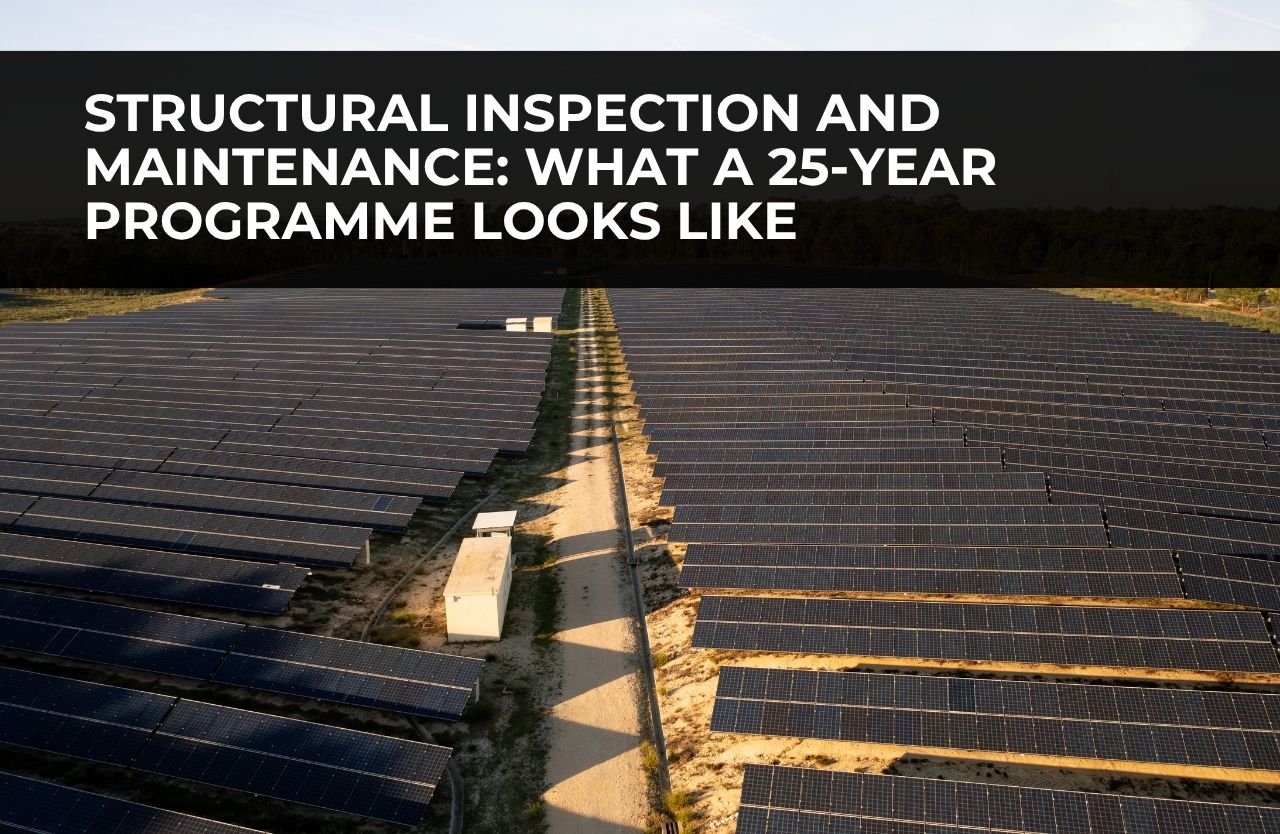
Structural inspection and maintenance of a commercial solar installation

Structural Inspection and Maintenance: What a 25-Year Programme Looks Like

A commercial solar structure with no maintenance plan is not a low-maintenance asset. It is an unmaintained asset, and the distinction matters when the remediation cost eventually arrives.

A structured inspection and maintenance programme by a maintenance team for commercial solar structures typically includes:

  • Annual visual inspection of all accessible structural connections, column bases, foundation collars, and purlins, with photographic record and comparison to baseline.
  • Five-yearly detailed structural inspection by a qualified structural engineer, assessing corrosion progression, connection integrity, and structural movement against original as-built drawings.
  • Torque verification of bolted connections on a schedule appropriate to the loading environment, typically every two to three years for high-wind exposure sites.
  • Corrosion treatment of any damage to the galvanised surface identified during inspection, using compatible zinc-rich paint systems applied to prepared surfaces before the base steel is exposed.
  • Foundation settlement monitoring for sites with expansive soil conditions or seismic activity, using reference datum points established at commissioning.


The South Africa Solar O&M Best Practice Guidelines, referenced in the industry’s broader performance framework, establish monitoring and inspection intervals as a baseline expectation for commercial solar assets. Lenders and insurers increasingly treat documented O&M programmes as a condition of project financing and coverage. An asset owner who cannot demonstrate a structured inspection history faces complications at the point of refinancing, sale, or insurance claim.

Vegetation management deserves specific mention. In ground-mounted and carport installations, uncontrolled vegetation growth beneath the array introduces shading losses, elevated fire risk, and moisture retention at column bases that accelerates corrosion. It is the simplest maintenance intervention and the one most commonly deferred until the consequences are visible.

System Upgrades Over the Operating Life

A 25-year solar investment does not operate with the same hardware at year 25 as it does at year one. Inverters, monitoring systems, and increasingly the modules themselves are replaced over the project lifecycle. The structure needs to have been designed with this reality in mind.

Inverter replacement is the most predictable intervention. Commercial string and central inverters carry typical operating lives of 10 to 15 years. A project financed for 25 years will replace its inverters at least once, and possibly twice. The structural and civil implications are straightforward if the original installation was designed around equipment replacement: adequate cable routing clearance, accessible enclosures, and conduit sizing that accommodates upgraded wiring specifications. They become costly if the original design was optimised for minimum material content without regard for what happens in year twelve.

Module technology has advanced considerably since the commercial bifacial formats that now dominate new installations were introduced. In the medium term, next-generation module formats with higher power density and altered physical dimensions will enter the replacement market. The ability to upgrade to higher-yield modules on existing racking depends on whether the structural design incorporated appropriate clearances, rail adjustability, and load margins for modules that may be heavier or carry greater wind area than the original specification.

Engineering Decisions That Determine the 25-Year Outcome

The decisions that most influence whether a commercial solar structure reaches its design life, corrosion protection specification, structural connection detailing, thermal expansion management, and O&M programme design, are almost all made during engineering. They are not visible in a commissioning report or a year-one performance summary. They accumulate their consequences slowly, in ways that are usually traceable to specific choices made before ground was broken.

That is the case for engaging an engineering partner who will still be available to answer questions in year ten. Not because anything will necessarily go wrong. But because when something does, the value of having the original design team, the as-built documentation, and the engineering rationale accessible is impossible to overstate.

S.M.E.I. Renewables designs and constructs commercial solar structures under ISO 9001, ISO 45001, and ISO 3834 certified quality systems. We retain full as-built documentation and structural design records for all completed projects. If you are developing or engineering a commercial or industrial solar project and want to discuss what lifecycle performance engineering actually requires, contact us to arrange a site-specific assessment.

Why Local Fabrication Matters in Solar Carport and Tracker Installations

Engineer reviewing a solar carport installation that demonstrates the importance of local fabrication and structural quality.

Solar carports and tracker plants are not “just panels on steel”. They’re engineered structures that must survive decades of wind, weather, corrosion, vibration, thermal expansion, and real-world maintenance. In 2026, the difference between a smooth project and a painful one often comes down to a very practical question:

Where is your steelwork being fabricated and who controls quality?

For developers, engineers and ESG leads, local fabrication isn’t a patriotic nice-to-have. It’s a delivery and risk decision.

Why steelwork is the project’s make-or-break layer

Carports and trackers sit in the “Balance of Plant” world, civil works, structures, trackers, mounting hardware, foundations, and electrical integration. This is the part of the build that drives programme risk (delays), quality risk (rework), and lifecycle risk (corrosion, fatigue, alignment issues).

South African industry research is clear that localisation opportunities exist beyond panels, including mounting and tracking structures and wider manufactured inputs into the BoP. That’s not an accident, structures are heavy, transport-sensitive, and highly dependent on correct fabrication and surface protection.

Shorter lead times and fewer “shipping surprises”

Imported structures can look cheaper on paper, until you add:

  • long ocean freight timelines,
  • port congestion risk,
  • customs delays,
  • damage in transit,
  • missing or incorrect components,
  • slow rework cycles when something doesn’t fit on site.

With local sourcing solar steelwork, you reduce dependence on external logistics and compress the “problem to solution” loop. When a site condition changes or a detail needs adjusting, local fabrication means redesign and rework can happen in days — not months.

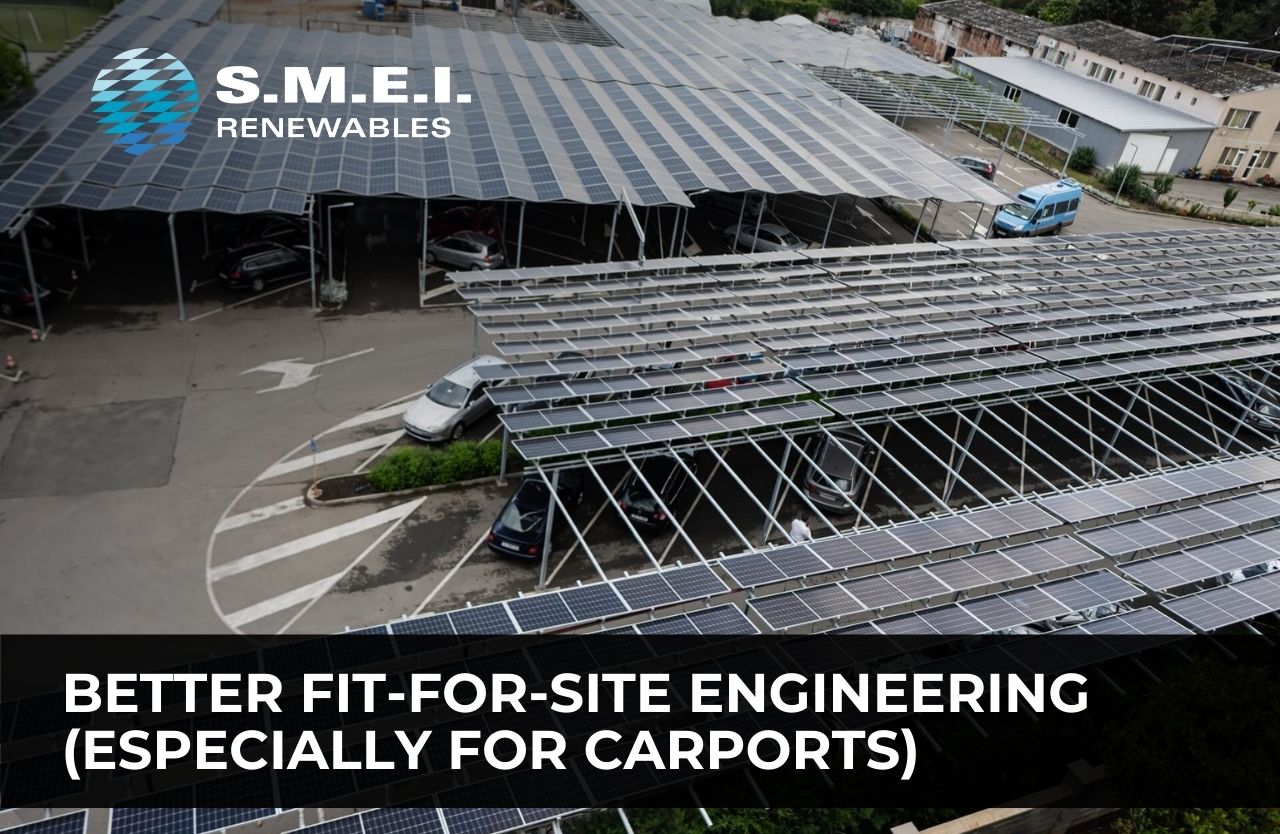
Engineered solar carport structure adapted to site-specific constraints including traffic flow, column spacing and underground services.

Better fit-for-site engineering (especially for carports)

Carports are not one-size-fits-all. Height restrictions, traffic flow, stormwater management, column placement, and underground services can force structural changes. If fabrication is offshore, teams often try to “make it work” on site — which is exactly how you end up with:

  • unplanned drilling and welding on site,
  • compromised coatings,
  • rushed fixes that become future corrosion points,
  • programme delays and cost overruns.

Local fabrication supports a more realistic approach: engineer to the site you actually have, not the site you wish you had.

Quality control you can physically verify

Trackers and carport structures demand consistent tolerances, correct hole patterns, correct galvanising/coating specs, and traceability across batches.

Quality control frameworks for mounting structures and trackers typically focus on structural integrity, corrosion durability, mechanical performance, and verification testing. That’s easier to manage when your fabrication and QA teams are in the same country, operating in the same time zone, and able to resolve snags fast.

For engineers, this matters because fabrication quality becomes commissioning quality, and commissioning quality becomes performance and warranty risk.

Lower lifecycle risk through controlled welding and workmanship

Here’s the uncomfortable truth: poor welding doesn’t always fail immediately. It fails later, under fatigue cycles, heat, vibration and environmental exposure.

That’s why reputable fabrication environments are built around formal welding quality requirements and welder qualification standards (the kind of standards many industrial projects reference globally). When your EPC has in-house fabrication with controlled welding processes, it’s easier to enforce:

  • consistent procedures,
  • qualified welders,
  • inspection regimes,
  • documentation and traceability.

For asset owners, this translates into fewer “mystery failures” and fewer maintenance headaches.

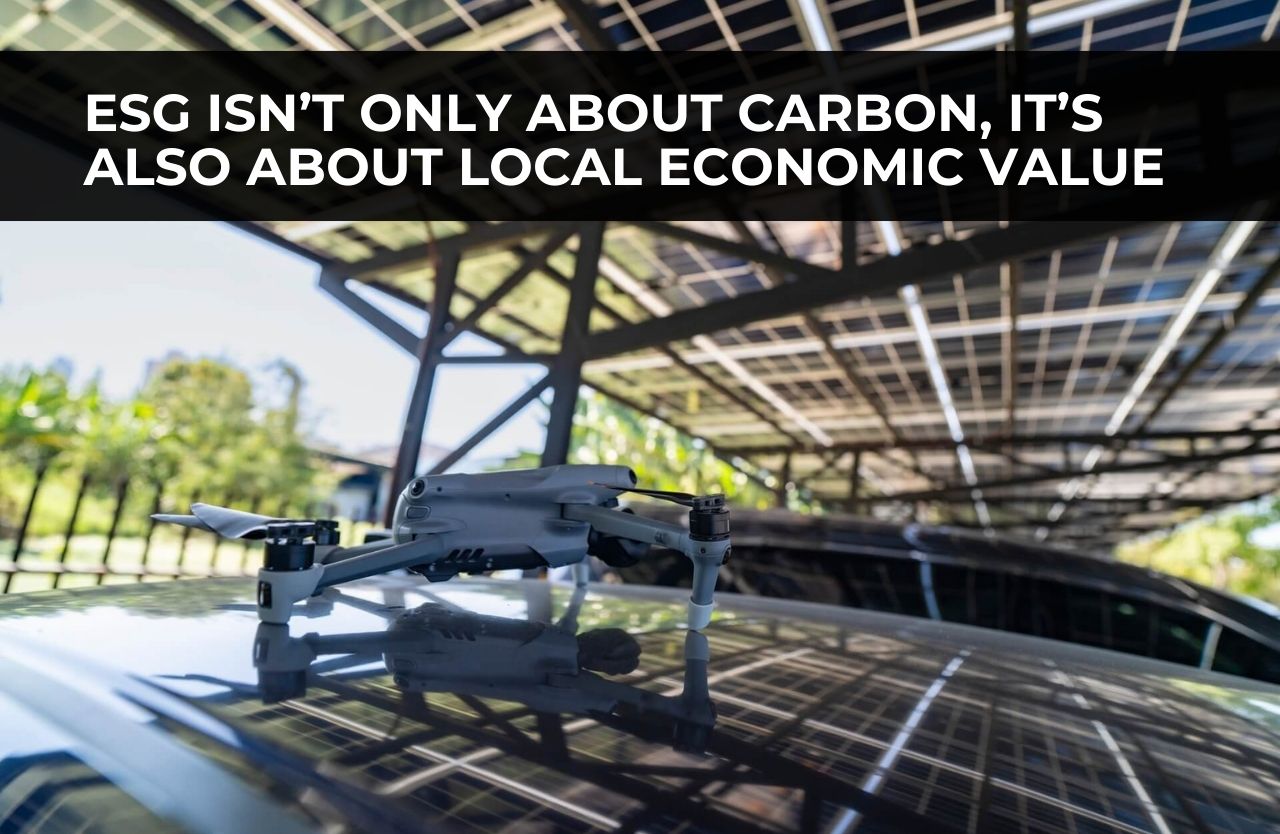
Drone inspection of a solar carport structure highlighting local economic value and responsible infrastructure development.

ESG isn’t only about carbon, it’s also about local economic value

ESG leads are increasingly measured on local economic contribution, supply chain resilience, and “real” sustainability. Local fabrication supports skills development in industrial trades, job creation in fabrication and construction, stronger local supplier ecosystems, and, less dependence on volatile global supply chains.

South Africa’s policy and market direction continues to push localisation strategies in renewable value chains and link them to industrial development goals (including the steel value chain). In other words: local content isn’t going away — it’s becoming more structured and more scrutinised.

What to ask your EPC or structure supplier

If you want the benefits of local solar fabrication in South Africa, don’t just ask “Do you fabricate locally?” Ask:

  1. Where is the steelwork fabricated, and can we visit the facility?
  2. What QA processes are in place for tolerances, coatings, and traceability?
  3. How are welding procedures controlled and inspected?
  4. What happens if site conditions force design changes mid-project?
  5. What is the spares and replacement strategy over the first 5 years?
  6. How do you manage corrosion protection for the specific environment (coastal, industrial, high-wind)?

Where S.M.E.I. Renewables fits in

For carports and trackers, the strongest outcomes happen when engineering, fabrication and construction teams work as one unit.

S.M.E.I. Renewables’ model is built for that reality: in-house steelwork and controlled fabrication capability so projects aren’t at the mercy of long offshore lead times, unclear QA, or slow rework cycles. It’s a practical advantage that supports faster delivery, stronger build quality, easier design optimisation, and, long-term maintainability.

And because S.M.E.I. supplies and installs solar carports, the structural layer isn’t a bolt-on, it’s part of the core project outcome.

Sources

  • Solar PV manufacturing/localisation opportunities (incl. mounting & tracking structures; BoP inputs): Solar PV Manufacturing Report (Energy Partnership / SAPVIA report).
  • South African Renewable Energy Masterplan – localisation focus and BoP localisation potential: GreenCape, SAREM Draft (March 2022).
  • Localisation strategies and policy direction for renewable value chains: Megatrends Afrika, Localization Strategies for South Africa’s Renewable Energy… (Nov 2025 policy brief).
  • Steel policy context supporting local procurement/local manufacturing: the DTIC, Briefing on the status and implementation of the Steel Masterplan.
  • Quality control considerations for mounting structures & PV tracking systems (integrity, corrosion, mechanical performance): Sinovoltaics, Quality Control for Solar Mounting Structures & PV Tracking.
  • Welding quality requirements and the role of ISO 3834 in welding quality assurance: ISO 3834-5 (overview sample) and related welding quality guidance.
  • Welder qualification standard listing (ISO 9606 series): ISO Online Browsing Platform entry for ISO 9606 parts.

How Ground-Mounted Solar Is Changing the Face of Mining Energy in Africa

Ground-mounted solar panels powering a mining operation in Africa

Powering a New Era of Mining Energy

Across Africa, mining operations are rethinking how they power their production. Rising electricity costs, unreliable grids, and ESG targets have made energy resilience a top priority. For mines operating in remote areas, traditional reliance on diesel and unstable grid supply is no longer sustainable – operationally, financially, or environmentally.

Ground-mounted solar is fast becoming the preferred energy solution for mines across the continent. Beyond cutting costs, it delivers energy independence, improves uptime, and aligns with the global transition toward cleaner, low-carbon operations.

At S.M.E.I. Renewables, we design and construct high-performance ground-mounted solar systems for industrial and mining clients across Africa, backed by ISO-certified quality and decades of experience in mining infrastructure.

Renewable solar installation at an industrial mining site

Mining Needs Renewable Energy Now

Mining is among the most energy-intensive sectors in the world. Powering crushers, processing plants, ventilation systems, and dewatering operations demands constant, large-scale electricity. But in Africa, this comes with major challenges:

  • Grid instability:

Many mining regions experience load shedding, voltage fluctuations, and limited grid access.

  • Diesel dependence:

Remote mines rely heavily on diesel generators, which are costly, logistically complex, and carbon-intensive.

  • Rising tariffs:

Escalating electricity costs erode profitability and planning certainty.

  • ESG and investor pressure:

Mining companies face increasing demand to decarbonise operations and demonstrate tangible sustainability progress.

These realities are driving a shift toward self-generated renewable energy – particularly solar – as the backbone of modern mining energy strategies.


Why Ground-Mounted Solar Is the Ideal Mining Solution

Unlike rooftop or containerised systems, ground-mounted solar is engineered for scale and durability, which is essential for mining environments that demand high reliability and easy maintenance.

Key advantages include:

  1. Scalability for large power demands:
    Ground-mounted arrays can expand from a few megawatts to 100 MW+ systems, meeting the needs of large-scale operations.
  2. Optimal energy yield:
    Installed at precise tilt and orientation angles, ground-mounted systems capture maximum sunlight throughout the year, often outperforming rooftop installations.
  3. Use of non-productive land:
    Solar farms can be built on unused or rehabilitated land, tailings areas, or buffer zones, turning underutilised space into a power-generating asset.
  4. Modular and easy to maintain:
    With accessible layouts and durable racking, these systems allow efficient cleaning and maintenance, which is crucial in dusty mining conditions.
  5. Seamless hybrid integration:
    Ground-mounted solar integrates easily with battery storage or diesel/gas backup for hybrid or off-grid configurations, ensuring continuous supply 24/7.

For many mines, the result is a significant reduction in operational costs and carbon emissions while maintaining the reliability required for continuous production.

Off-grid hybrid solar system for mining energy resilience

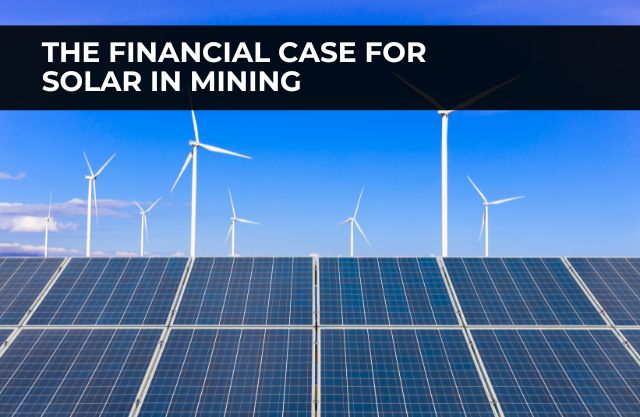
The Financial Case for Solar in Mining

The economics of solar for mining are compelling:

  • Cost stability:

Once installed, solar provides predictable energy costs for 20 + years, shielding mines from tariff increases and fuel price volatility.

  • Rapid payback:

Most mining solar projects achieve ROI within 4-6 years, depending on system size and financing structure.

  • Fuel savings:

Every megawatt-hour of solar power replaces costly diesel or grid electricity.

  • Carbon and tax benefits:

Mines gain measurable ESG improvements and potential savings through carbon tax offsets and renewable energy incentives.

For example, a platinum mine in Rustenburg, South Africa, modelled a 54 MW solar PV system that could save over R5.6 billion in electricity costs and R563 million in carbon tax over 20 years.


Technical Design Considerations

Building solar for mines requires engineering-grade precision. From terrain and dust management to electrical integration, S.M.E.I. Renewables ensures every site is optimised for longevity and performance.

Key design factors include:

  • Site analysis:

Assessing topography, soil composition, and irradiance to ensure structural stability and maximum yield.

  • Dust mitigation:

Using anti-soiling coatings, cleaning systems, and optimal tilt angles to combat production losses from dust.

  • Tracking systems:

Incorporating single-axis or dual-axis trackers for improved generation and efficiency.

  • Hybrid control systems:

Balancing solar, storage, and diesel to provide consistent baseload power.

  • Grid and electrical integration:

Managing synchronization, harmonics, protection systems, and grid-code compliance.

  • Long-term maintenance:

Designing for durability with accessible layouts, corrosion-resistant materials, and remote monitoring systems.

Mining Solar Success Stories Across Africa

Solar energy is already transforming mining operations across the continent:

  1. B2Gold Mine (Mali):

One of the world’s largest off-grid hybrid plants – combining solar, battery storage, and thermal generation.

  1. Sibanye-Stillwater (South Africa):

Deploying large-scale solar capacity to offset grid dependency and enhance sustainability.

  1. JUWI / Pan African Resources:

A hybrid solar-battery plant in Evander Gold Mine demonstrating strong performance and cost savings.

These projects demonstrate that solar for mines is not a theoretical option, it’s a proven model delivering real-world impact.


How To Overcome Challenges

Every mining site has unique energy needs and operational challenges. Common barriers include high upfront costs, regulatory delays, and complex environmental conditions.

S.M.E.I. Renewables mitigates these through:

  • Flexible financing models – including EPC, PPA, or BOOT structures.
  • In-house engineering and fabrication – ensuring quality control from design to installation.
  • Regulatory and stakeholder support – navigating environmental approvals and community engagement.
  • ISO-certified systems – ensuring quality (ISO 9001), safety (ISO 45001), and environmental compliance (ISO 14001).
  • Comprehensive O&M services – maximising uptime and long-term performance.

By managing every stage of delivery, we reduce project risk and accelerate deployment timelines, helping mines transition to renewables with confidence.


Partner with S.M.E.I. Renewables

With deep roots in Africa’s mining and industrial sectors, S.M.E.I. Renewables brings unmatched construction and design capability to every solar installation.

  • Proven mining experience:

Decades of EPC and project management success across open-pit, processing, and industrial sites.

  • End-to-end capability:

From structural steel and electrical integration to complete solar system construction.

  • ISO-certified quality:

Compliance with ISO 9001, ISO 45001, and ISO 14001 ensures world-class standards in every project.

  • Regional expertise:

Active across South Africa, Namibia, Botswana, Zambia, and beyond, familiar with local permitting, terrain, and grid codes.

Whether grid-connected or fully off-grid, S.M.E.I. delivers engineered, construction-grade solar systems built for the demands of mining.


The Future of Mining Energy Is Solar

Ground-mounted solar is no longer an alternative, it’s becoming the foundation of mining energy resilience across Africa.

Mines that act now will secure long-term energy independence, reduce operational risk, and strengthen ESG performance, while improving profitability.

If you’re exploring renewable mining energy solutions, our team is ready to help you plan, design, and build a system that works for your operation.

Contact S.M.E.I. Renewables today to discuss a site assessment or feasibility study for your mining project.

Smart Space Engineering: Transforming Empty Land into Renewable Energy Hubs

Smart Space solar project on previously unused land

Rethinking the Value of Space

Across Africa, vast stretches of land sit idle, this includes old industrial sites, parking areas, open fields, and unused plots waiting for purpose.

At the same time, energy demand is rising, grid instability is increasing, and sustainability commitments are tightening.

What if those empty spaces could become renewable energy hubs that power communities, businesses, and industries?

That’s the principle behind Smart Space Engineering – a design and construction philosophy championed by S.M.E.I. Renewables, where every square metre of land is seen as an opportunity for energy generation and long-term environmental impact.

S.M.E.I. Renewables example of solar project land use

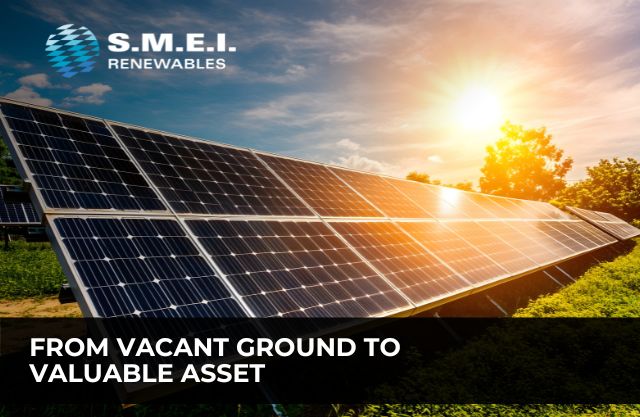
From Vacant Ground to Valuable Asset

For decades, vacant or underutilised land has represented dormant potential – an expense rather than an income-generating asset. Solar project land use changes that equation.

With the right engineering and feasibility approach, open ground can host utility-scale solar installations that deliver measurable ROI and ESG value.

  • Industrial and commercial properties can convert parking lots or unused sections into solar carports or ground-mounted arrays.
  • Developers can integrate solar fields into new mixed-use or industrial parks as embedded generation zones.
  • Municipalities and landowners can lease idle land for solar farms, unlocking stable long-term revenue streams.

Instead of lying around doing nothing, the land begins to produce power, profits, and progress.


The Smart Space Philosophy

At S.M.E.I. Renewables, we believe that smart energy design begins with intelligent land use. Our Smart Space Engineering philosophy transforms overlooked sites into efficient, resilient, and aesthetically integrated energy systems.

What makes a space “smart”?

  1. Engineering integration from day one:
    Smart Space projects begin with feasibility and geotechnical studies that consider soil, slope, shading, and infrastructure connectivity from the outset – ensuring solar layouts are optimised for yield and longevity.
  2. Dual-purpose functionality:
    Smart solar installations can do more than generate power – they can shade vehicles, protect assets, enhance aesthetics, or coexist with agriculture (agrivoltaics).
  3. Future-ready scalability:
    Designs anticipate future battery storage, EV charging, or microgrid integration.
  4. Minimal disruption, maximum return:
    Through modular, pre-engineered systems, Smart Space solar can be constructed quickly with minimal interference to surrounding operations.

In short, Smart Space Engineering is where civil, electrical, and environmental design intersect – creating renewable systems that work with, not against, the land they occupy.

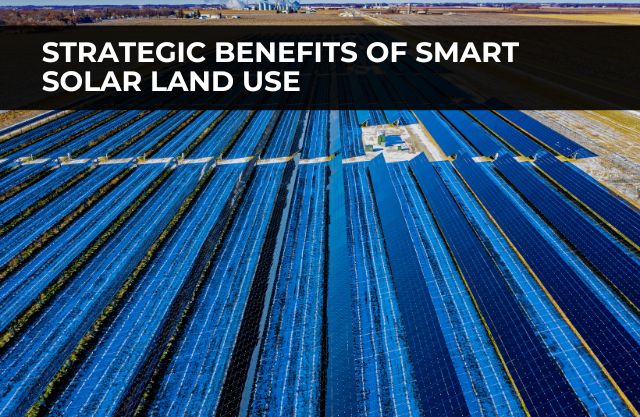
Utility-scale solar installation transforming vacant ground into energy hub

Strategic Benefits of Smart Solar Land Use

For property developers, asset managers, and ESG officers, Smart Space projects deliver measurable value across multiple dimensions.

  1. ESG Impact and Compliance:
  • Solar installations directly reduce Scope 2 emissions and improve sustainability reporting metrics.
  • Demonstrates visible commitment to green infrastructure, strengthening investor and community confidence.
  1. Financial Returns
  • Generates long-term power savings or rental income through Power Purchase Agreements (PPAs) or land-lease models.
  • Adds tangible asset value to the property portfolio through renewable infrastructure integration.
  1. Land Optimisation
  • Converts unused or degraded land into a productive site.
  • Avoids the need for additional property acquisition for renewable projects.
  1. Energy Resilience
  • Supports onsite generation, lowering dependency on unstable grids and mitigating load-shedding risk.

Smart Space solar projects aren’t just sustainable – they’re strategic, turning environmental responsibility into economic opportunity.


The Engineering Behind the Vision

Transforming open ground into an energy hub requires precise planning and multi-disciplinary coordination.

S.M.E.I. Renewables applies engineering-grade feasibility, design, and construction management to every Smart Space solar project.

Our process includes:

  1. Feasibility & Yield Analysis:
    Assessing solar irradiation, topography, soil composition, drainage, and accessibility to determine the best installation design and expected output.
  2. Civil & Structural Design:

Incorporating stormwater control, foundation engineering, and load analysis to ensure structural integrity and long-term durability.

  1. Electrical & Integration Design:
    Designing grid connections, cabling routes, inverter and switchgear placement, and safety systems in compliance with local standards.
  2. Construction & Fabrication:
    Leveraging S.M.E.I.’s in-house steel fabrication and construction teams to maintain full control over quality, cost, and delivery timelines.
  3. Monitoring & Maintenance:
    Implementing smart monitoring systems that provide real-time performance data, predictive maintenance alerts, and output optimisation.

This end-to-end capability, from feasibility to build, is what sets S.M.E.I. apart in the renewable energy construction space.


Real-World Smart Space Applications

  1. Commercial Carports and Parking Canopies
    Transforming parking lots into dual-purpose assets that provide shade, EV charging infrastructure, and onsite energy generation.
  2. Industrial and Logistics Parks
    Integrating solar into warehouses and surrounding land to stabilise energy costs for tenants.
  3. Agricultural and Rural Sites
    Designing solar fields that coexist with crops or livestock (agrivoltaics) to improve land productivity and power resilience.
  4. Brownfield or Rehabilitated Land
    Repurposing previously disturbed or mined land for renewable generation, supporting environmental restoration and reuse.

Each of these applications demonstrates how solar for vacant land can unlock new forms of economic and environmental value.


Work with S.M.E.I. Renewables

With decades of experience in large-scale construction and engineering across Africa, S.M.E.I. Renewables combines technical depth with visionary design.

Our Smart Space advantage:

  • We have a proven track record in structural, mechanical, electrical, and civil engineering for renewable infrastructure.
  • ISO-certified quality systems ensuring compliance with ISO 9001 (quality), ISO 45001 (safety), and ISO 14001 (environment).
  • In-house feasibility and fabrication capabilities which allows full control from concept to commissioning.
  • Pan-African presence across South Africa, Namibia, Botswana, and Zambia, ensuring regional expertise and responsiveness.

Whether you’re developing a new industrial park or revitalising idle property, we help you turn empty ground into engineered energy assets that support long-term sustainability goals.


Building the Future, One Smart Space at a Time

The renewable transition isn’t just about cleaner power, it’s about using the land we already have more intelligently.
Through Smart Space Engineering, S.M.E.I. Renewables helps businesses, developers, and municipalities convert idle ground into resilient, future-ready solar assets.

Let’s transform your property into part of Africa’s clean energy infrastructure.

Contact S.M.E.I. Renewables to start your Smart Space feasibility study today.

Boosting Your Bottom Line – The Financial Advantages and ROI of Solar Carports

Boosting Your Bottom Line – The Financial Advantages and ROI of Solar Carports

In today’s volatile energy market, businesses are searching for ways to control costs and achieve predictable energy bills, making an understanding of the financial advantages and ROI of solar carports essential. Solar carports stand out as a powerful financial tool—offering not just environmental benefits, but also a robust return on investment (ROI). By integrating solar energy systems into your commercial property, you can significantly lower operational costs and secure a more stable financial future.

Predictable Energy Costs in an Unstable Market

Predictable Energy Costs in an Unstable Market

South Africa’s energy landscape is marked by unpredictable electricity prices and frequent power disruptions. By installing solar carports, businesses can fix their electricity costs over the lifespan of the solar panels—typically 25 years or more. This hedge against rising utility rates is a vital component of long-term financial planning.

According to IRENA, solar photovoltaic (PV) systems have an average payback period of 4–7 years. With a solar carport, you’re not only reducing current electricity expenditures but also insulating your business from future price hikes. This stability can prove invaluable for budgeting and operational planning.

Flexible Financial Models for Every Business

One of the significant advantages of solar carports is the range of financial models available to suit different business needs:

  • Power Purchase Agreements (PPA): With a PPA, you can install a solar system with little to no upfront cost. You then purchase the generated electricity at a lower, fixed rate than the grid, locking in substantial savings over time.
  • Lease-To-Own Options: This model allows businesses to lease the solar system with an eventual option to own, reducing the financial barrier to entry while ensuring predictable energy costs.
  • EPC (Engineering, Procurement, and Construction) Services: By opting for a turnkey EPC solution, businesses benefit from professional design, installation, and maintenance, ensuring maximum efficiency and performance from day one.

These models offer flexibility and reduce initial capital expenditure, making solar carports accessible for businesses of all sizes.

Long-Term Financial Gains

The financial advantages of solar carports extend well beyond immediate cost savings. They offer a predictable revenue stream through lower energy bills and the potential for energy buy-back schemes. Government incentives—such as the Expanded Section 12B Tax Allowance (SARS Draft Guide)—can further enhance the ROI by offsetting upfront costs.

The overall effect is a significant boost to your bottom line: reduced operational costs, improved cash flow stability, and enhanced property value. These benefits collectively translate into a more competitive and resilient business model.

Make the Investment That Pays Off with S.M.E.I. Renewables

Make the Investment That Pays Off with S.M.E.I. Renewables

Given the current energy challenges and rising utility costs in South Africa, adopting a solar carport solution is more than just an environmental decision—it’s a strategic financial move. With over 25 years of experience in developing solutions across the mining, commercial, industrial, and agricultural sectors, S.M.E.I. Renewables, a division of S.M.E.I. Projects is uniquely positioned to guide you through the solutions best suited to your business. By leveraging our expertise, you can secure long-term savings and safeguard your business against future uncertainties.

Take Action Now: Secure your financial future and boost your bottom line by partnering with S.M.E.I. Renewables. Explore your options and see how predictable energy costs can transform your business operations while benefiting from our decades of industry-leading experience.

Solar Energy: Paving the Way to Net-Zero Carbon for Businesses in South Africa

Paving the Way to Net-Zero Carbon for Businesses in South Africa

As sustainability moves higher on the corporate agenda, businesses around the world—and in South Africa—are increasingly setting ambitious net-zero carbon for businesses targets. Achieving net-zero means that a company’s greenhouse gas emissions are balanced by removal or offsetting measures, resulting in no net impact on the climate. Solar energy plays a pivotal role in reaching these targets by replacing fossil fuel-based power with clean, renewable electricity, significantly reducing carbon footprints while delivering long-term financial benefits.


What Does Net-Zero Carbon Mean and Why Is It a Priority?

Net-zero carbon is defined as the point at which the total greenhouse gas emissions produced by a business are equal to the amount removed from the atmosphere. This goal has become a business priority for several key reasons:

  • Climate Responsibility: With global warming posing serious risks, companies are under increasing pressure from consumers, investors, and regulators to operate sustainably.
  • Regulatory Requirements: Governments are introducing stricter environmental regulations and incentives to drive emissions reductions. In South Africa, for example, policies such as the Expanded Section 12B Tax Allowance and various green energy rebates help encourage businesses to invest in renewable energy.
  • Corporate Reputation: Achieving net-zero can enhance a company’s brand image, attracting environmentally conscious customers and investors.
  • Operational Resilience: By reducing reliance on fossil fuels, businesses can shield themselves from volatile energy prices and supply disruptions.

These factors have led companies to explore renewable energy sources as a critical component of their sustainability strategy.

How Solar Energy and Energy Efficiency Measures Help Achieve Net-Zero

How Solar Energy and Energy Efficiency Measures Help Achieve Net-Zero

Solar energy is uniquely positioned to support net-zero carbon goals through several mechanisms:

  • Reducing Direct Emissions: Solar installations generate electricity without burning fossil fuels, directly lowering a company’s carbon emissions. With South Africa’s abundant sunshine—many regions receive over 2,500 hours of sunlight per year—solar energy can meet a substantial portion of a business’s energy needs.
  • Offsetting High Energy Demand: Data centres, manufacturing facilities, and other energy-intensive operations can significantly reduce their carbon footprint by using solar power. For example, solar systems integrated with battery storage ensure that even during outages or peak demand periods, operations run on clean energy rather than grid power, which is often generated from fossil fuels.
  • Complementary Energy Efficiency: Beyond solar installations, businesses can further lower their carbon footprint by implementing additional energy efficiency measures such as LED lighting, improved insulation, and smart energy management systems.

These measures not only contribute to environmental sustainability but also offer a stable, predictable energy supply and long-term cost savings.


Case Studies: Solar-Powered Journeys to Net-Zero

Several companies around the globe have successfully integrated solar energy into their operations to move closer to net-zero:

  • Apple’s Data Centres: Apple’s commitment to 100% renewable energy in its data centres, supported by large-scale solar farms, serves as a benchmark for how tech companies can drastically reduce their emissions while ensuring reliable operations.
  • Microsoft’s Azure Facilities: Microsoft is on track to power its Azure data centres with renewable energy by 2025. Solar installations at these centres not only reduce energy costs but also play a key role in minimizing the company’s carbon footprint.
  • South African Manufacturers: In South Africa, innovative manufacturing companies are beginning to adopt solar-plus-storage solutions. By supplementing grid power with rooftop solar and integrating energy efficiency measures, these companies are reducing their energy bills and lowering their overall emissions. Although specific case studies are emerging, early adopters report potential energy savings of up to 50% on annual costs, while also significantly cutting carbon emissions.

These examples illustrate that with the right investment, solar energy can be a transformative tool for achieving net-zero carbon targets.


The Broader Impact: Economic and Environmental Benefits

Investing in solar energy not only helps businesses meet net-zero carbon targets but also offers several ancillary benefits:

  • Financial Stability: Fixed energy costs from solar installations reduce exposure to rising grid tariffs, leading to improved long-term profitability.
  • Resilience: Solar systems with battery storage ensure continuous operations during power outages, a critical advantage in regions where infrastructure challenges persist.
  • Enhanced Competitiveness: Companies that adopt renewable energy can differentiate themselves in a competitive market, appealing to investors and consumers who value sustainability.
  • Government Incentives: South African businesses can take advantage of government schemes such as the Expanded Section 12B Tax Allowance and various rebate programs, which help reduce the upfront costs of solar installations and improve overall ROI (SANews, SARS Draft Guide).


Looking Ahead: A Sustainable Future Powered by Solar

The journey toward net-zero carbon is not only a moral and environmental imperative but also a strategic business decision. By integrating solar energy into their operations, South African businesses can drastically reduce their carbon footprints, secure reliable and cost-effective power, and position themselves at the forefront of sustainability in the global market.

At S.M.E.I. Renewables, we’re committed to helping businesses implement solar solutions that support their net-zero ambitions. Whether it’s through premium rooftop installations, solar carports, or mobile solar units, our tailored solutions are designed to meet your unique energy needs.

Achieve Net-Zero Carbon for Businesses in South Africa with S.M.E.I. Renewables

Take the Next Step

Embrace the power of solar energy and join the movement towards a net-zero future. Contact S.M.E.I. Renewables today to learn how our solar solutions can help transform your business operations, reduce your carbon footprint, and secure long-term savings.


Sources:

  1. International Renewable Energy Agency (IRENA) – Insights on global energy demand and the role of renewables. IRENA
  2. SANews – Government initiatives and renewable energy incentives in South Africa. SANews
  3. SARS Draft Guide on Allowances and Deductions – Detailed information on the Expanded Section 12B Tax Allowance. SARS Draft Guide
  4. BusinessTech & CSIR Reports – Data on energy challenges and operational impacts in South Africa. BusinessTech | CSIR

Powering Your Business: Government Incentives and Rebates for Solar Energy Adoption in South Africa

As businesses in South Africa face increasing electricity costs and ongoing power outages, the adoption of solar energy has become a vital step toward operational resilience and sustainability. What many businesses may not realise is that the South African government offers a range of financial incentives, tax rebates, and grants to help offset the initial costs of installing solar energy systems. These programmes not only make solar adoption more affordable but also align with long-term financial savings and energy independence.

This blog explores the key government incentives available for solar energy adoption, how businesses can qualify for them, and the significant benefits of investing in renewable energy.

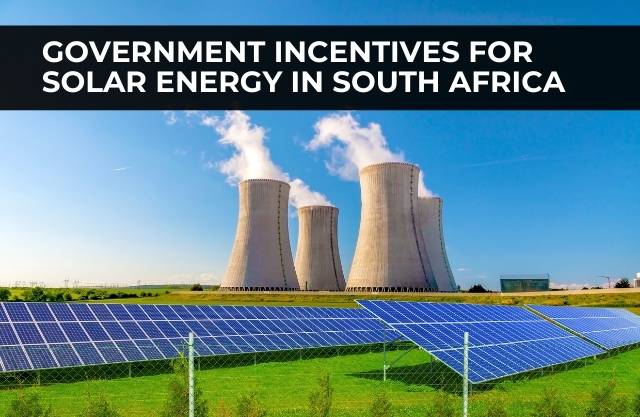
Government Incentives for Solar Energy in South Africa

The South African government has introduced various initiatives to encourage businesses to invest in renewable energy, with solar power taking centre stage. Here are the most prominent programmes:

  1. Expanded Section 12B Tax Allowance
    Businesses can benefit from the Section 12B tax allowance, which allows for a 100% deduction of the cost of renewable energy assets in the first year of operation. This means that businesses can write off the full cost of their solar energy systems against their taxable income in the same year, providing significant cash flow relief.
  2. Solar Energy Rebates for Small Businesses
    Small and medium enterprises (SMEs) can access government rebates that cover a percentage of the installation costs for solar systems. These rebates aim to reduce the financial burden on smaller businesses, helping them transition to renewable energy sources.
  3. Rooftop Solar Incentive (2023 Budget Announcement)
    In the 2023 national budget, the government announced a R4 billion rooftop solar rebate programme for businesses and households. This initiative supports the installation of rooftop solar systems and offers additional incentives for solar-plus-storage systems.
  4. Carbon Tax Rebates
    Businesses that install solar energy systems can also benefit from carbon tax rebates. By generating renewable energy, companies reduce their carbon footprint and offset liabilities under South Africa’s carbon tax legislation.
  5. Green Energy Financing Options
    Programmes like the Energy Bounce Back Loan Scheme offer low-interest loans and grants to businesses investing in renewable energy projects. These financing options are designed to make solar installations more accessible and cost-effective.

How Businesses Can Qualify and Apply

To access these incentives, businesses need to meet certain eligibility criteria and follow specific application processes:

  1. Understand Your Energy Needs
    Conduct an energy audit to determine the size and scope of the solar energy system you require. This will help identify the most relevant incentives for your business.
  2. Work with Certified Installers
    Many programmes require that solar installations are conducted by certified installers to ensure compliance with safety and quality standards. Partnering with a reputable provider like S.M.E.I. Renewables ensures that your system meets the necessary criteria.
  3. File for Tax Rebates
    For the Section 12B allowance, include the full cost of your solar energy system in your tax return. Work with a tax advisor to maximise the benefit.
  4. Apply for Grants or Loans
    For rebates or financing options, businesses typically need to submit detailed applications, including proof of installation, energy usage data, and compliance with programme requirements.
  5. Monitor Policy Updates
    Renewable energy incentives may change over time as the government expands or refines its energy transition strategy. Staying informed ensures you don’t miss out on new opportunities.

Linking Incentives to Long-Term Savings

The upfront costs of solar installations often deter businesses from making the switch. However, when combined with government incentives, the financial case for solar energy becomes compelling. For instance:

  • Immediate Cost Reduction: Rebates and tax allowances reduce the initial outlay, making solar installations more affordable.
  • Operational Savings: Once installed, solar systems lower electricity bills, with savings of up to 50% on annual energy costs.
  • Energy Independence: Businesses reduce reliance on Eskom’s grid, shielding themselves from tariff increases and power outages.
  • Enhanced ROI: Incentives improve the return on investment by shortening the payback period for solar systems, often to five years or less.

Why Now Is the Time to Invest

The South African government’s push for renewable energy adoption aligns with global efforts to combat climate change and transition to cleaner energy sources. For businesses, this presents a unique opportunity to secure long-term financial stability while contributing to a more sustainable future.

With tax breaks, rebates, and financing options available, there’s never been a better time to invest in solar energy. The combination of immediate cost reductions and ongoing operational savings ensures that your business not only adapts to current challenges but also thrives in the years to come.

Partner with S.M.E.I. Renewables for a Seamless Transition

At S.M.E.I. Renewables, we specialise in implementing tailored solar solutions that meet the unique energy needs of your business. From premium solar carports to mobile solar units, ground mount solar, and beyond, our expertise ensures a seamless transition to renewable energy.

Contact us today to explore how our solar solutions can transform your business operations, enhance resilience, and deliver long-term savings.

Power Through the Darkness: How Solar Energy Enhances Operational Resilience in Power Outage-Prone Areas

Power outages have become a persistent challenge for businesses across South Africa, disrupting operations, increasing costs, and diminishing productivity. While recent months have seen a reduction in load shedding, extended and severe outages caused by a lack of maintenance on existing infrastructure continue to threaten business continuity. Operational resilience is no longer a luxury—it’s a necessity. Solar energy, when paired with energy storage systems, offers a powerful solution, enabling businesses to maintain operations, reduce reliance on the grid, and mitigate the financial and operational impacts of power outages.

This blog explores the role of solar energy in enhancing operational resilience, the return on investment (ROI) for systems designed to combat power disruptions, and real-world examples of businesses thriving despite ongoing electricity challenges.

The Cost of Power Outages: A Threat to Business Continuity

Power outages continue to wreak havoc on South African businesses, leading to lost revenue, increased operational costs, and reputational damage. A survey by the South African Property Owners Association (SAPOA) revealed that over 70% of respondents reported a serious or very serious impact on their operations due to outages. Only 1.69% indicated no impact, underscoring the widespread challenges posed by unreliable electricity supply.

The manufacturing sector has been particularly hard-hit. Data from Statistics South Africa showed a 1.1% decrease in manufacturing production in November 2022 compared to the same period in 2021, with power outages cited as a significant contributing factor (SABC News).

Even with load shedding not in action, how long will it take for the manufacturing sector to fully recover?

How Solar Energy Keeps the Lights On

Solar energy, combined with battery storage, enables businesses to generate and store their own power. During outages, stored solar energy can be used to keep critical operations running, ensuring minimal disruption. This setup creates a buffer against the unpredictability of grid supply, empowering businesses to take control of their energy needs.

  • Energy Independence: Solar systems with storage reduce dependency on Eskom, giving businesses the autonomy to continue operations even during extended outages.
  • Seamless Transitions: Advanced solar systems with inverters ensure a smooth switch to stored energy during outages, preventing downtime.
  • Cost Efficiency: Over time, businesses save on diesel generator costs, fuel expenses, and grid electricity charges by investing in solar energy solutions.

The ROI of Solar Energy Systems

Investing in solar energy systems, particularly those equipped with battery storage, offers a strong return on investment (ROI). While initial setup costs may seem high, the long-term savings and operational resilience far outweigh these expenses.

  1. Cost Savings: Businesses save significantly by reducing reliance on grid electricity and diesel generators, which are both costly and environmentally harmful.
  2. Increased Productivity: By avoiding downtime during outages, businesses maintain consistent revenue streams.
  3. Energy Stability: Solar energy systems help stabilise energy costs, insulating businesses from future grid tariff increases.

For example, in the energy-intensive manufacturing sector, solar energy presents a significant opportunity to reduce costs and enhance profitability. According to the International Renewable Energy Agency (IRENA), industries such as iron and steel, non-ferrous metals, and petrochemical manufacturing account for over 75% of global energy demand, placing a substantial financial and environmental burden on these sectors. Solar panel installations enable businesses to fix electricity costs for the lifespan of the system, which can exceed 25 years, providing long-term financial stability. In South Africa, where electricity costs have been rising steadily, this can translate into savings of up to 50% on annual electricity expenses for factories without batteries, and even higher savings during daytime operations. By leveraging previously unused rooftop or water space for solar installations, manufacturing plants can not only reduce operational costs but also support sustainability initiatives that resonate with eco-conscious consumers and align with corporate social responsibility goals.

Envisioning the Future: Potential Impact of Solar Energy in Key Sectors

With the right solar energy and battery storage systems in place, South African businesses across various sectors could transform their operations, ensuring resilience and sustainability even during power outages.

Retail Sector:
Imagine a supermarket chain in KwaZulu-Natal implementing a solar energy system with battery storage to power refrigeration units during outages. With this setup, perishable goods could remain fresh, protecting the business from significant losses and maintaining customer trust. The reliability of solar energy could allow such businesses to consistently meet customer demands, even during extended disruptions.

Agriculture:
In the Western Cape, a wine farm could integrate solar energy to power its irrigation systems and cold storage facilities. This would enable the farm to continue operations seamlessly, reducing spoilage and ensuring uninterrupted exports during power outages. Over time, such a system could enhance the farm’s efficiency, stabilise costs, and align with sustainability goals, improving its marketability to eco-conscious buyers.

Manufacturing:
An electronics manufacturer in Durban could adopt solar power with energy storage to keep production lines running during outages. This shift could protect the company from power disruptions, reduce operating costs by as much as 40%, and bolster profitability. Over time, the company could reinvest these savings into scaling operations, innovating new products, or further enhancing sustainability practices, positioning itself as a leader in its industry.

By embracing solar energy solutions, businesses in these sectors have the potential to not only safeguard their operations but also thrive in a challenging energy environment, paving the way for a more resilient and sustainable future.

Solar Energy: A Resilient Future for South African Businesses

The increasing frequency of power outages in South Africa, coupled with infrastructure-related disruptions, makes operational resilience a top priority for businesses. Solar energy, particularly when paired with advanced energy storage solutions, provides a sustainable and reliable path forward.

By reducing reliance on the national grid, cutting costs, and ensuring uninterrupted operations, solar energy systems enable businesses to stay competitive in a challenging environment. Whether you’re in retail, agriculture, manufacturing, or mining, investing in solar energy is a step toward long-term stability and growth.

Partner with S.M.E.I. Renewables for Reliable Solar Solutions

S.M.E.I. Renewables specialises in designing and implementing customised solar energy solutions tailored to your business’s needs. From seamless integration with existing systems to cutting-edge battery storage options, our expertise ensures that your operations remain resilient, even during the toughest power outages.

Contact S.M.E.I. Renewables today to explore how solar energy can enhance your operational resilience and future-proof your business.

Powering the Future: Sustainable Energy Solutions for Commercial Spaces

In today’s business landscape, sustainability is no longer just a buzzword—it’s a necessity. Commercial spaces across South Africa are increasingly looking towards sustainable energy solutions to reduce operational costs, minimise environmental impact, and stay ahead of market trends. The benefits of adopting sustainable energy are multifaceted, from lowering overheads to reducing carbon footprints, and ensuring long-term financial savings. By investing in these energy solutions, businesses can not only become more environmentally responsible but also future-proof themselves against rising utility costs and grid instability.

There are numerous sustainable energy options available to commercial spaces, ranging from solar carports to cutting-edge solar-mounted technologies. In this blog, we’ll explore these options and how they can benefit your business.

Turn Parking into Power: How Solar Carports Slash Utility Bills for Businesses

Solar carports are an innovative and practical solution for commercial spaces looking to harness solar energy. These structures allow businesses to generate electricity by installing solar carport structures, which provide shaded parking while simultaneously producing clean energy. The dual-functionality of solar carports makes them an attractive option for companies with large parking areas, helping them transform these spaces into energy-generating assets.

The financial benefits of solar carports are immediate. By generating renewable energy on-site, businesses can significantly reduce their reliance on the national grid, leading to lower utility bills. Additionally, solar carports can protect against peak energy pricing and provide energy security during periods of load shedding. For more details on how solar carports can reduce costs, read our blog on the benefits of solar carport structures.

Beyond financial savings, solar carports also play a role in improving a business’s sustainability profile. They offer a visible, tangible demonstration of a company’s commitment to environmental responsibility, which can enhance brand perception and appeal to eco-conscious customers and partners.

Solar-Mounted Structures

What are Solar-Mounted Structures?

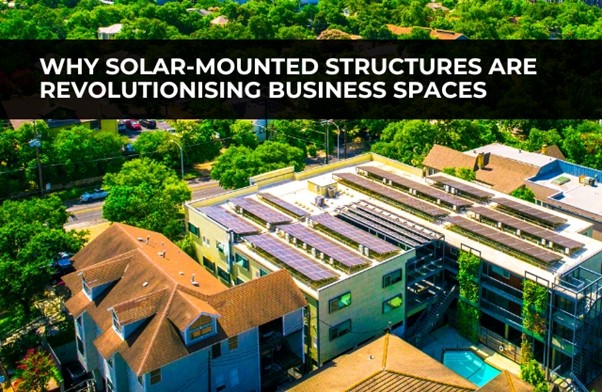
Solar-mounted structures are a forward-thinking solution for businesses seeking to integrate solar panels into existing or new building elements. These systems can be installed on awnings, canopies, building facades, and other architectural features, turning previously unused spaces into energy-generating assets. By making the most of underutilised areas, businesses can incorporate solar technology without taking up additional land, making this a smart and space-efficient solution.

The Dual Benefits of Solar-Mounted Structures

One of the most appealing aspects of solar-mounted structures is their ability to serve dual purposes. These installations not only generate electricity but also provide shade or weather protection, making them highly functional. Moreover, they can be designed to enhance the aesthetic appeal of a building, offering a sleek, modern look that aligns with a company’s brand image.

For businesses operating in dense urban environments, where space is limited, solar-mounted structures provide a way to adopt renewable energy without compromising on valuable ground space. These installations are also flexible in terms of application, allowing businesses to decide where and how solar panels are integrated based on their specific energy needs and building design.

Why Solar-Mounted Structures are Revolutionising Business Spaces

The adoption of solar-mounted structures is revolutionising how businesses incorporate sustainable energy. These structures allow for flexibility in design and placement, making them a versatile option for any commercial property. By integrating renewable energy into their architectural framework, companies can reduce their carbon footprint, improve their energy efficiency, and project a modern, environmentally-conscious image.

For example, a business might install solar awnings over outdoor seating areas or use solar canopies to shelter walkways, all while generating electricity to power lights, HVAC systems, or other operations. The potential to combine functionality with sustainability is what makes solar-mounted structures a game-changer for businesses across industries.

Energise Open Spaces: Why Ground-Mounted Solar Makes Sense for Larger Properties

Optimising Land Use with Ground-Mounted Solar

Ground-mounted solar systems are another powerful option for commercial spaces with larger land areas. These systems involve installing solar panels directly on the ground, making them ideal for businesses that have ample outdoor space but lack the necessary rooftop capacity for solar installations.

Ground-mounted solar systems can be more efficient than rooftop systems because they allow for optimal positioning of the panels for maximum sun exposure. This means businesses can generate more electricity and make the most of their investment in renewable energy. Additionally, ground-mounted systems are easier to maintain and expand, making them a great option for businesses looking to scale their energy solutions in the future.

When Ground-Mounted Solar Shines the Brightest

These systems are particularly useful in situations where the commercial property has underutilised land, such as large parking lots, vacant fields, or industrial sites. They are also well-suited for rural or agricultural businesses, which often have more space available for such installations. In these cases, ground-mounted solar can provide an efficient, high-output solution for businesses looking to generate large amounts of renewable energy.

If you’re considering a larger-scale installation, our post on utility-scale solar projects provides further insights into the advantages and applications of solar energy on a broad scale.

S.M.E.I. Renewables: Your Partner in Sustainable Energy Innovation

S.M.E.I. Renewables is at the forefront of delivering comprehensive solar energy solutions for commercial spaces throughout Southern Africa. Whether you’re new to solar energy or seeking to expand your existing capacity, we offer a full range of solutions to meet your specific needs. Our expertise spans everything from standard rooftop solar solutions to premium solar carports, and ground mounted solar ensuring that your business can tap into renewable energy in a way that makes the most sense for your operations.

At S.M.E.I. Renewables, we pride ourselves on being a one-stop partner for businesses looking to transition to sustainable energy. Our solutions help businesses stabilise their cash flow by reducing reliance on the grid, hedging against rising utility costs, and providing long-term energy security. We work closely with each client to develop a customised approach that aligns with their energy goals and financial objectives.

By investing in our solar energy solutions, businesses not only reduce their operational expenses but also make a positive impact on the environment. With options like rooftop solar, ground-mounted systems, and solar carports, we offer a diverse array of solutions to transform any commercial space into a sustainable, energy-efficient operation. For businesses looking to make the most of underutilised spaces, our expertise in turning empty spaces into smart, energy-generating areas sets us apart in the industry.

Conclusion

Sustainable energy solutions are no longer optional for businesses—they are essential for maintaining operational efficiency, reducing costs, and ensuring long-term viability. By incorporating solar energy into their commercial spaces, businesses can lower overheads, decrease their carbon footprint, and gain greater control over their energy consumption.

Whether through solar carports, solar-mounted structures, or ground-mounted solar systems, there is a solution for every business. Choosing the right option depends on factors such as available space, energy needs, and financial goals. As energy costs continue to rise and environmental concerns grow, now is the time for businesses to take action.

If you’re ready to explore how sustainable energy can benefit your commercial space, contact S.M.E.I. Renewables today to help you implement solutions that will not only reduce your energy costs but also contribute to a greener, more sustainable future.

Harnessing the Power of the Sun: Agricultural Solar Power Systems in Southern Africa

In the ever-evolving agricultural sector, the need for reliable, eco-friendly, and energy-efficient solutions is more urgent than ever. Agricultural solar power systems offer a powerful alternative for farmers in Southern Africa, providing a sustainable way to reduce energy costs while enhancing productivity. With the region’s abundant sunlight, these systems are uniquely positioned to meet the challenges of rising electricity prices and unreliable power supply, making them an essential component of modern farming operations.

Agrivoltaics: Pairing Solar Power and Agriculture

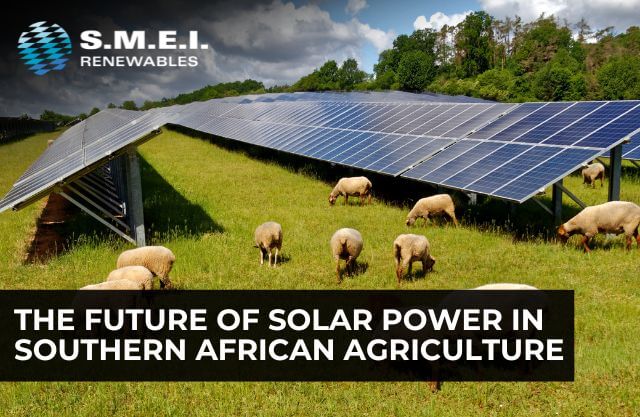
Agrivoltaics is an innovative approach that combines solar power generation with agricultural production on the same land. This method involves installing solar panels above crops or grazing areas, allowing farmers to harness solar energy while simultaneously growing crops or raising livestock underneath. In Southern Africa, where land use efficiency is crucial, agrivoltaics offers a dual benefit: it maximises land productivity and provides farmers with an additional income stream from solar energy generation. By pairing solar power with agriculture, this approach not only boosts energy production but also contributes to crop protection and enhanced water retention, making it a sustainable and profitable solution for the region’s farmers.

The Role of Solar Power in Agriculture

Solar power systems have become a cornerstone of modern agricultural practices, offering versatile applications that meet the diverse needs of the sector. In Southern Africa, these systems are being utilised in various ways:

  • Poultry and Dairy Power Security: Solar energy provides consistent and reliable power for poultry and dairy farms, ensuring that operations like ventilation, lighting, and temperature control are maintained without interruption.
  • Crop Shading Applications: Solar panels can double as shading structures, protecting crops from excessive heat while generating electricity—a perfect example of maximising land use.
  • Greenhouses: Solar-powered greenhouses offer a controlled environment for growing crops, with energy-efficient systems managing lighting, heating, and irrigation.
  • Processing Plants and Pump Stations: Solar energy powers essential machinery in processing plants and pump stations, reducing reliance on grid electricity and lowering operational costs.

By harnessing the sun’s energy, farmers can ensure their operations are not only sustainable but also resilient against the challenges of power outages and rising electricity costs.

Economic and Environmental Benefits

The economic advantages of solar power in agriculture are clear. With rising energy costs and frequent power disruptions, solar energy provides a cost-effective solution that offers long-term savings. The initial investment in solar infrastructure is offset by the significant reduction in monthly energy bills and the potential for government incentives or rebates, which are available in South Africa for renewable energy projects.

Moreover, solar energy contributes to environmental sustainability. By reducing dependence on fossil fuels, farms can lower their carbon footprint, aligning with global and regional efforts to combat climate change. Sustainable farming practices, powered by renewable energy, not only protect the environment but also enhance the reputation of agricultural businesses, attracting environmentally conscious consumers and partners.

Challenges and Considerations

While the benefits are numerous, adopting solar power in agriculture does come with challenges. Upfront costs can be a barrier, especially for small-scale farmers. Additionally, the maintenance and technical expertise required to manage solar systems may pose difficulties.

However, these challenges are not insurmountable. Financing options, such as leasing arrangements, through the AFD Green Energy Fund, and for certain qualifying SMEs the option to finance through a corporation’s ESD (enterprise and supplier development) initiatives can alleviate the burden of initial costs.

The Future of Solar Power in Southern African Agriculture

The future of agriculture in Southern Africa is bright—literally and figuratively. As more farmers adopt solar power, the agricultural landscape will continue to evolve, with increased energy security, improved productivity, and enhanced sustainability.

Emerging technologies, such as smart solar systems that integrate with IoT devices, will further optimise energy use on farms, making operations more efficient and cost-effective. Solar power is not just a trend; it is a vital component of the future of farming in Southern Africa.

Conclusion

Solar power systems offer a revolutionary solution to many of the challenges faced by the agricultural sector in Southern Africa. From reducing energy costs to enhancing productivity and promoting environmental sustainability, the benefits of solar energy are clear.

For farmers and agricultural businesses looking to thrive in an increasingly competitive and resource-constrained environment, solar power is not just an option—it’s a necessity. By partnering with experts like S.M.E.I. Renewables, farmers can implement tailored solar solutions that meet their specific needs, ensuring a sustainable and prosperous future.

Contact us today to learn more about our tailored solar solutions for the agricultural sector and take the first step towards a sustainable, energy-efficient future.


The Role of Energy Storage in Utility-Scale Solar Projects

As the demand for clean, renewable energy continues to grow, utility-scale solar projects are playing a crucial role in meeting this demand. However, one of the key challenges of solar power is its intermittency – the sun doesn’t shine 24/7, and weather conditions can affect energy production. This is where energy storage systems come into play. By incorporating advanced storage solutions, utility-scale solar projects can enhance their reliability and efficiency, ensuring a consistent power supply even when the sun isn’t shining.


Understanding Energy Storage Systems

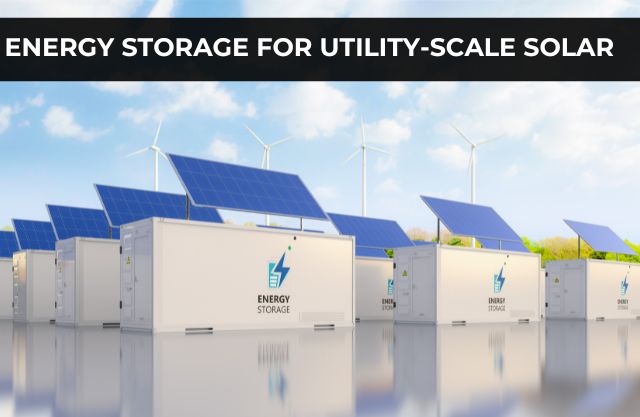
Energy storage systems capture energy produced during peak sunlight hours and store it for use during periods of low sunlight or high demand. There are several types of energy storage technologies, each with its own set of advantages and applications. The most common type is used in utility-scale solar projects include battery storage.

The Advantages of Battery Storage for Utility-Scale Solar Projects

Battery Storage

Battery storage systems, particularly lithium-ion batteries, are among the most widely used storage solutions in utility-scale solar projects. These batteries store excess electricity generated during sunny periods and release it when needed. Recent advancements in battery technology have significantly increased their storage capacity, efficiency, and lifespan, making them a viable option for large-scale energy storage.

Advantages of Battery Storage:

  • Scalability: Battery systems can be scaled to meet the needs of any project size, from small installations to large solar farms.
  • Fast Response Time: Batteries can quickly discharge stored energy, providing immediate power when needed.
  • Flexibility: Battery storage can be deployed in various configurations, from on-site storage at solar plants to distributed storage systems.


Advancements in Storage Technology

Recent years have seen significant advancements in energy storage technologies, driven by the need for more efficient, cost-effective, and scalable solutions. Innovations in battery technology, such as solid-state batteries and flow batteries, are promising to deliver higher energy densities, longer lifespans, and safer operations. 

Key Technological Innovations:

  1. Solid-State Batteries: These batteries use solid electrolytes instead of liquid ones, offering higher energy densities and improved safety.
  2. Flow Batteries: Flow batteries use liquid electrolytes stored in external tanks, allowing for flexible scaling of storage capacity.

Energy Storage for Utility-Scale Solar

Benefits of Energy Storage for Utility-Scale Solar

Incorporating energy storage into utility-scale solar projects offers several significant benefits:


  1. Enhanced Reliability: Energy storage systems ensure a continuous power supply by bridging the gap between production and demand, particularly during cloudy periods or nighttime.
  2. Grid Stability: By providing a stable and predictable source of energy, storage systems help stabilise the grid and reduce the need for fossil fuel-based backup power.
  3. Cost Savings: Storing energy during periods of low demand and high production can help reduce electricity costs and maximise the financial return on solar investments.
  4. Environmental Impact: Energy storage reduces the need for fossil fuel-powered peaker plants, thereby decreasing greenhouse gas emissions and promoting a cleaner energy mix.


S.M.E.I. Renewables: Leading the Way in Solar Innovation

At S.M.E.I. Renewables, we are committed to advancing the integration of energy storage in utility-scale solar projects. Our team is dedicated to developing and implementing the latest storage technologies according to client requirements, ensuring our projects deliver reliable, efficient, and sustainable energy solutions.


By harnessing the power of energy storage, we are not only enhancing the performance of our solar installations but also paving the way for a future where clean, renewable energy is accessible and dependable for all.


Conclusion

Energy storage systems are revolutionising the utility-scale solar industry by addressing the inherent intermittency of solar power. Through technological advancements and innovative solutions, these systems are enhancing the reliability, efficiency, and economic viability of solar projects. At S.M.E.I. Renewables, we are proud to be at the forefront of this transformation, delivering cutting-edge energy solutions that drive sustainability and energy independence.

For more information about our projects and services, visit S.M.E.I. Renewables and join us in creating a brighter, cleaner future for all.

Harnessing the Power of Utility-Scale Solar Plants: A Bright Future with S.M.E.I. Renewables

Utility-scale Solar Plant

As the world pivots towards sustainable energy solutions, utility-scale solar plants are emerging as a cornerstone of this green revolution. At S.M.E.I. Renewables, we pride ourselves on being at the forefront of this movement, leveraging engineering, structural and electrical expertise in the renewable energy sector to deliver cutting-edge solar installations. This blog delves into the significance, benefits, and future prospects of utility-scale solar plants, underscoring our role in driving this change.


The Rise of Utility-Scale Solar Power

Utility-scale solar power has been generating reliable, clean electricity with stable fuel prices for decades. It is one of the fastest ways to reduce carbon emissions and transition towards a clean energy future. The scope and scale of these installations mean that they can meet significant energy demands while balancing environmental protection with our energy and climate goals.

The Advantages of Utility-Scale Solar Plants

Key Advantages of Utility-Scale Solar

Environmental Impact

Utility-scale solar plants significantly reduce greenhouse gas emissions by replacing fossil fuel-generated electricity with clean, renewable energy. This reduction in carbon footprint is crucial for combating climate change and promoting environmental sustainability.


Economic Benefits

Solar power plants create jobs across the supply chain, from research and development to manufacturing, project finance, and construction. By investing in utility-scale solar, we are not only fostering a cleaner environment but also stimulating economic growth and job creation.


Cost-Effectiveness

Due to economies of scale, utility-scale solar installations are more cost-effective compared to smaller, decentralised systems. As technology advances and solar panel costs continue to decline, these installations will become even more affordable, making them a financially viable option for large-scale energy production.

Technology Behind Utility-Scale Solar

Technology Behind Utility-Scale Solar

Photovoltaic (PV) Systems

PV systems are the most common technology used in utility-scale solar plants. They consist of solar panels made up of silicon layers that absorb sunlight and convert it into electricity. These systems can be deployed over vast areas to generate significant amounts of power, which is then fed into the grid.


The Role of Energy Storage

Energy storage is a critical component of utility-scale solar installations. By pairing solar plants with energy storage systems, we can manage energy supply during peak demand periods and provide backup power when sunlight is not available. This combination enhances the stability and reliability of the energy grid, making renewable energy a more dependable source.


S.M.E.I. Renewables: Pioneering Solar Solutions

At S.M.E.I. Renewables, our team is dedicated to implementing state-of-the-art utility-scale solar plants. Our projects not only contribute to reducing carbon emissions but also support local economies by creating job opportunities and fostering technological innovation.


Future Prospects

The future of utility-scale solar is incredibly promising. By 2050, it is predicted that solar photovoltaic (PV) capacity will increase exponentially, making solar the largest provider of electricity worldwide. This growth will be driven by continued technological advancements, decreasing costs, and supportive government policies.


Global Trends

In regions like North America, Europe, and Asia, utility-scale solar is set to dominate the energy landscape. Countries such as China and India are leading the charge, installing vast amounts of PV capacity to meet their growing energy needs. In Sub-Saharan Africa, off-grid solar solutions will initially prevail, but as infrastructure improves, utility-scale installations will become more prominent.


Conclusion

Utility-scale solar power is a key player in the global shift towards sustainable energy. At S.M.E.I. Renewables, we are proud to be part of this journey, delivering innovative solar solutions that drive economic growth, create jobs, and protect our planet. As we look to the future, our commitment to excellence and sustainability remains unwavering, ensuring that we continue to lead the way in renewable energy.


For more information about our projects and services, visit S.M.E.I. Renewables and join us in creating a brighter, cleaner future for all.