
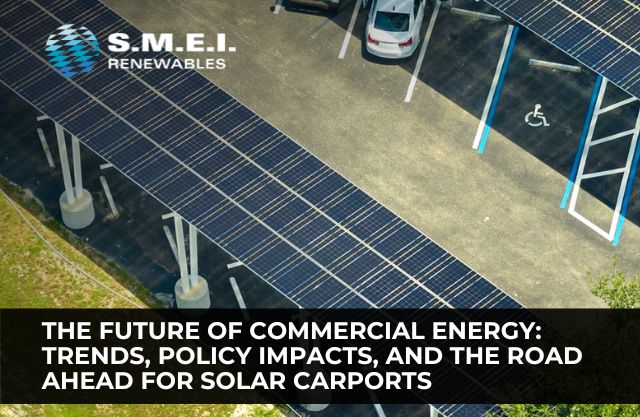
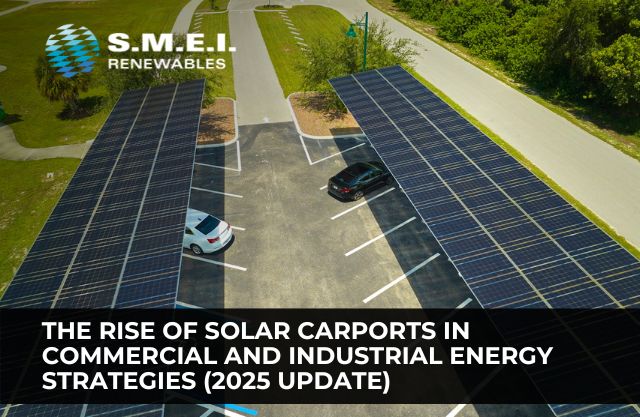
As commercial and industrial properties race to meet sustainability targets and reduce operational costs, solar carports are emerging as a powerful, multi-functional clean energy solution. From shopping centres and office parks to factories and educational campuses, these structures are transforming underutilised parking areas into high-performance energy assets.
Why Solar Carports Are Surging in Popularity
Recent global market research (March–June 2025) reveals a compound annual growth rate (CAGR) of 9.78% to 16.5% projected through 2034. The commercial sector leads adoption, representing up to 76% of installations globally. The primary appeal? Solar carports deliver dual value: shaded, climate-resilient parking and reliable renewable energy generation.
At a time when corporate ESG (Environmental, Social, Governance) accountability is non-negotiable, solar carports provide a highly visible, functional testament to sustainability. They not only reduce electricity bills and carbon footprints, but also showcase a company’s commitment to clean energy—a narrative that resonates with clients, investors, and employees alike.
Integration of Energy Storage and EV Charging
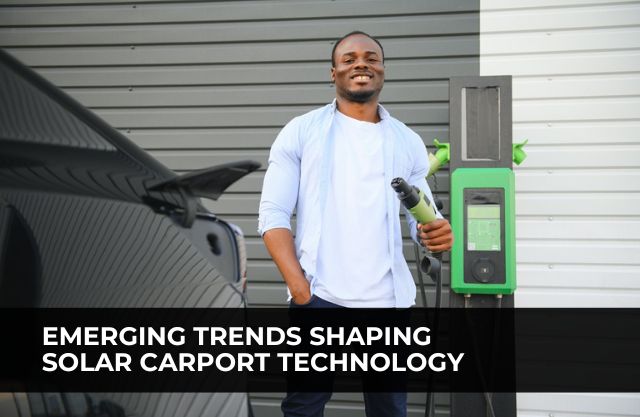
One of the most significant developments in 2025 is the rise of solar carports as full-fledged clean energy hubs. Paired with battery energy storage systems (BESS) and EV charging stations, carports now offer:
- 24/7 clean energy access, including during peak demand periods
- Power resilience during grid outages
- On-site EV charging to support employee fleets or public infrastructure
This triple integration dramatically enhances operational efficiency, supports ESG reporting, and unlocks potential revenue through grid participation and EV charging tariffs.
Breakthroughs in Solar Technology
Advanced solar panel innovations are redefining what’s possible for solar carport performance:
- Bifacial panels, which absorb light from both sides, boost generation by up to 30%.
- Perovskite and thin-film technologies offer lighter, flexible alternatives that broaden installation options, including curved surfaces and vertical integration.
- Building-integrated photovoltaics (BIPV) enable design-forward projects with seamless solar integration.
These advancements reduce the levelised cost of energy (LCOE) and increase long-term ROI for businesses.
Smart Carports: AI and IoT for Maximum Efficiency
The fusion of solar carports with AI and IoT is setting new benchmarks in efficiency and transparency. Commercial users can now:
- Monitor panel output and battery levels in real-time
- Predict weather impacts and adjust energy storage dynamically
- Automate system maintenance and performance alerts
These capabilities significantly reduce downtime, extend system life, and ensure optimal performance year-round.
Design Innovations and Engineering
Design flexibility has also evolved:
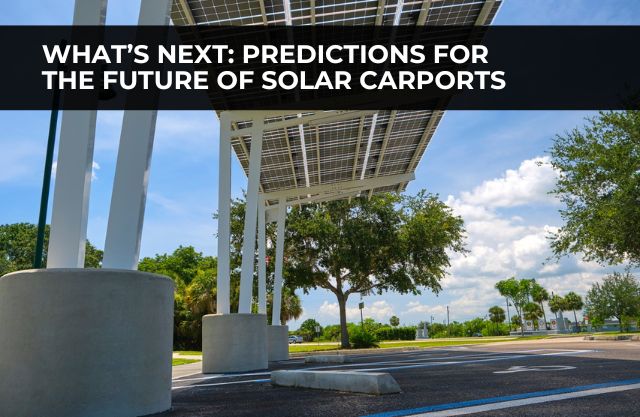
- T-shape carports dominate with 42% of market share in 2024, prized for space efficiency and solar optimisation
- Custom-engineered solutions allow for wind and snow loads, specific guardrails, uneven terrain, and local aesthetic or height requirements
Smart engineering ensures that carports enhance the site without disrupting operations—essential for logistics, retail, or manufacturing environments.
Key Considerations for Implementation
For commercial and industrial stakeholders planning a solar carport installation, three areas require careful navigation:
- Site Assessment: Tailored layout, structural analysis, and solar orientation
- Permitting & Incentives: Compliance with local regulations and leveraging available tax breaks or subsidies
- Grid Compatibility: Integration with existing energy systems and potential for smart grid services
In South Africa, tax deductions for renewable energy investments and a push toward decentralised energy supply are paving the way. Across Africa, lower capital costs and improved currency hedging will be critical to unlocking widespread adoption.
Sector and Regional Momentum
Key sectors accelerating adoption include:
- Retail & Shopping Centres: Aligning sustainability with customer experience
- Industrial Complexes: Reducing grid dependency and stabilising energy costs
- Educational Institutions: Supporting green campus initiatives and powering digital infrastructure
While the U.S., Canada, and Europe lead in terms of policy support and volume, Africa is gaining momentum. With abundant solar resources and pressing energy security concerns, the continent’s commercial solar carport potential is vast and still largely untapped.
Summary Table: Key Trends and Considerations
| Trend/Consideration | Details & Impact |
| Market Growth | 9.78–16.5% CAGR; commercial sector leads with 76% share |
| Energy Storage & EV Integration | Solar + storage + EV charging for 24/7 clean energy and resilience |
| Advanced Solar Technologies | Bifacial, perovskite, and thin-film panels increase efficiency and application flexibility |
| Smart Systems | AI/IoT for real-time monitoring, predictive optimization, and cost reduction |
| Design Innovations | T-shape and custom-engineered carports for space and energy maximization |
| Permitting & Incentives | Critical for project success; varies by region |
| Urban & Industrial Applications | Ideal for dense areas, turning parking into energy assets, supporting ESG and climate goals |
Final Word: Solar Carports Are More Than a Trend
Solar carports are no longer a futuristic concept—they are a strategic investment with immediate and long-term payoffs. As technology advances, costs decrease, and demand for clean energy intensifies, solar carports will become the cornerstone of commercial energy infrastructure.
For property owners and decision-makers, the time to act is now. Investing in solar carports is more than just smart energy management; it’s a visible, scalable, and resilient solution that positions your business for the energy landscape of tomorrow.
Get in touch with S.M.E.I. Renewables to discuss your next big power move.