
Solar carports in South Africa are emerging as one of the smartest ways for businesses to reduce their carbon footprint and generate clean energy on-site. These innovative structures integrate photovoltaic panels into car shelters, generating clean energy on-site while providing shade for vehicles. The result is a win-win: reduced electricity costs, protection from the elements, and a significant reduction in carbon emissions. Given South Africa’s heavy reliance on coal (around 87% of electricity generation), solar carports offer a critical opportunity to cut corporate carbon footprints and meet sustainability targets.
Turning Parking Spaces into Clean Energy Hubs
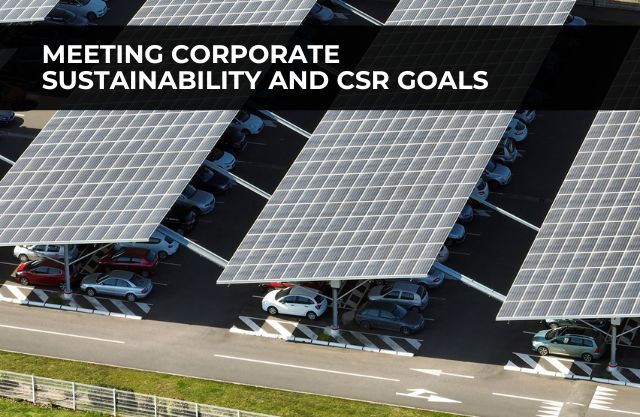
South Africa has seen a growing trend of solar carport installations over the past several years. Solar carports essentially transform ordinary parking areas into clean energy generation hubs. By mounting solar panels above parked cars, companies can produce their own electricity from sunlight. This reduces the amount of power drawn from the coal-heavy grid, directly lowering operating costs and greenhouse gas emissions. In the process, a previously unused space (the lot above vehicles) is utilised to contribute to the company’s energy needs and environmental goals.
From an environmental perspective, the impact is substantial. Each kilowatt-hour (kWh) of solar energy generated in South Africa avoids roughly 0.87 kilograms of CO<sub>2</sub> that would have been emitted from grid electricity. Over time, these savings add up significantly. For example, Ford Motor Company’s massive 13.5 MW solar carport in Pretoria now supplies 35% of its Silverton assembly plant’s electricity and eliminates about 20,072 tons of CO2 emissions per year. Even smaller installations yield notable benefits – a 103 kW solar carport with battery storage at a Durban resort generates ~142 MWh annually and cuts around 95 tons of CO2 each year. These real-world numbers highlight how solar carports directly contribute to sustainability by slashing carbon footprints through clean energy generation.
Meeting Corporate Sustainability and CSR Goals
Adopting solar carports can be a powerful demonstration of corporate social responsibility (CSR) in action. Businesses that invest in visible renewable energy infrastructure signal a strong commitment to sustainability, which can enhance their reputation among customers, partners, and the community. According to a Nielsen report, 68% of South African consumers are willing to pay a premium for brands that make a positive social and environmental impact. In other words, customers are paying attention – and they reward companies that walk the talk on green initiatives. Installing solar carports is a highly tangible way to “walk the talk,” as the installations are literally on display every day.
From an investor and stakeholder perspective, on-site solar projects also bolster a company’s ESG (Environmental, Social, Governance) profile. ESG criteria help investors evaluate companies based on their sustainability and ethical practices. By reducing grid energy consumption and lowering emissions, solar carports can improve a firm’s environmental performance metrics (such as carbon intensity per unit of revenue). Companies with strong sustainability credentials often find it easier to attract investment, talent, and business opportunities. Thus, a solar carport isn’t just an energy project – it’s a statement to shareholders and stakeholders that the company is proactive about climate action and long-term resilience.
In the South African context, many corporates have sustainability strategies aligned with national and global goals (like the Paris Agreement targets and South Africa’s commitment to net zero by 2050). Solar carports help meet these targets by providing a source of renewable energy on-site, reducing Scope 2 emissions (indirect emissions from purchased electricity) in corporate carbon inventories. They also contribute to broader CSR objectives such as community health (by reducing local air pollution from coal power reliance) and energy security (by lessening demand on an overstretched grid). All of this feeds into a positive feedback loop – the more a company can showcase measurable environmental improvements, the stronger its social license to operate and brand loyalty become.
Supporting Green Building Certifications and Incentives
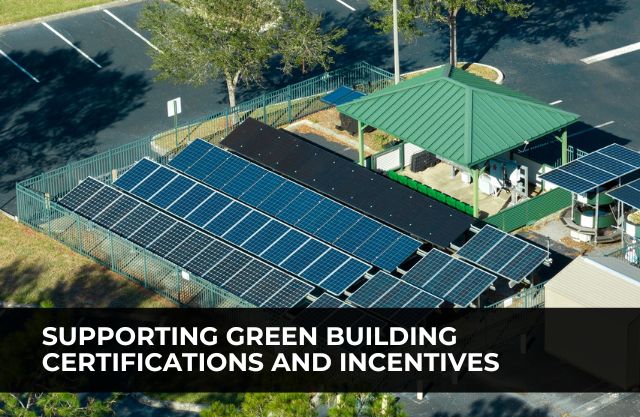
Solar carports can also assist companies in attaining sustainability certifications and taking advantage of government incentives in South Africa. For instance, many green building rating systems (such as the Green Building Council of South Africa’s Green Star SA programme) reward on-site renewable energy generation. Integrating a solar carport into a facility can earn points toward energy efficiency and innovation credits, helping the property achieve a higher green building rating. In some cases, solar installations can even move a building closer to net zero energy or carbon status, a prestigious achievement that demonstrates environmental leadership.
From a policy standpoint, the South African government has introduced incentives to encourage renewable energy adoption. A notable example is the Enhanced Business Tax Deduction (Section 12BA of the Income Tax Act), which allows companies to deduct 125% of the cost of renewable energy installations brought into use between 1 March 2023 and 28 February 2025. This super-deduction means businesses can write off more than the full cost of a solar carport in the first year, dramatically improving the return on investment. Additionally, there’s an energy efficiency savings allowance (Section 12L) that provides 95 cents per kWh saved through energy efficiency improvements, which can apply if the solar carport demonstrably reduces net energy consumption with a recognised certificate of savings.
South Africa’s carbon tax, implemented in June 2019, further tilts the scales in favor of clean energy. The tax rate started at R120 per ton of CO2 (with annual increases above inflation). While in its first phase the tax primarily affects direct emitters, companies can use renewables to mitigate future liabilities. Notably, purchasing renewable electricity can count towards carbon tax offsets under certain conditions. By generating solar power on-site, a company indirectly reduces the carbon emissions associated with its electricity use, which will become increasingly important as carbon pricing signals strengthen. In short, a solar carport can save money two ways: by cutting electricity bills and by positioning the business for potential tax relief or credits related to carbon reduction and energy efficiency.
Several other incentive programs and financing schemes are emerging as well. For example, some local governments and commercial banks offer green energy loans or grants for solar projects, and there’s a national Energy Bounce-Back Scheme (loan guarantee programme) to help small businesses invest in renewables. Solar carports, being highly visible and dual-purpose, are attractive projects under these schemes. Companies can proudly cite their solar carport when pursuing green building certifications or sustainability awards, checking boxes for on-site renewable generation, innovation in design, and even community impact (since employees and visitors directly experience the solar installation).
Conclusion:
Solar carports are more than a green energy upgrade—they’re a strategic asset. For South African businesses looking to reduce their carbon footprint, meet sustainability targets, and unlock government-backed incentives, these structures offer a visible, measurable, and practical solution. Whether you’re driven by rising energy costs, ESG reporting, or consumer expectations, a solar carport turns everyday infrastructure into a statement of progress.
By capturing sunlight in the parking lot, you’re not just cutting emissions—you’re making a bold move toward a cleaner, more resilient future.
Your carbon footprint doesn’t have to end in the parking lot.
Let’s design a solar carport that powers your business—and your climate commitments. Get in touch with us today!