
As South African businesses grapple with rising utility costs, managing operational expenses has become an increasing challenge. Despite Eskom’s recent reduction in load shedding, relying solely on the national grid is a risky long-term strategy. Businesses are seeking more reliable solutions to ensure continuity and stability. Solar carports are one such innovative solution. Not only do they reduce utility costs, but they also provide energy independence for businesses, making them an essential consideration for companies looking to stabilise their energy expenses.
The High Cost of Power: Why Utility Prices Are Squeezing Your Bottom Line
Electricity prices in South Africa have been climbing steadily, placing additional strain on the bottom line of businesses across the country. For many companies, the unpredictability of utility costs makes it difficult to create accurate operational budgets, often leading to financial strain. These rising expenses, combined with the fluctuating reliability of the national grid, make it increasingly difficult for businesses to maintain consistent energy costs.
In response, more businesses are exploring alternative energy solutions to mitigate these expenses. Solar carports offer a practical way to generate electricity on-site, directly reducing dependency on the grid and alleviating the financial impact of escalating energy prices. The benefits of solar energy for businesses extend beyond cost savings, providing long-term stability in a time of uncertainty. Companies that invest in renewable energy solutions like solar carports are able to better manage their operational expenses and gain control over their energy consumption.
Eskom’s Load Shedding Lull: Why Businesses Can’t Afford to Rely on the Grid
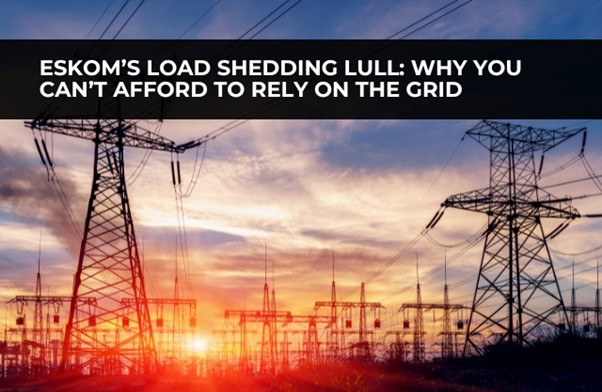
While Eskom has recently stabilised its load shedding schedule, the power utility’s long history of outages and price hikes means businesses must remain cautious. Although the current reduction in load shedding may provide temporary relief, relying solely on the national grid is a risky strategy for businesses that require a reliable and consistent energy source. Eskom’s infrastructure remains fragile, and future disruptions or even further price increases are always on the horizon.
Given Eskom’s track record, businesses must plan for the potential of future instability. Solar carports, by providing on-site renewable energy, offer a viable solution to reduce the risks associated with load shedding and grid reliance. By generating their own electricity, businesses can safeguard their operations from future power disruptions while also insulating themselves from the rising cost of grid electricity. For companies looking to gain greater control over their energy supply, solar carports offer a compelling alternative to the national grid.
Solar Carports: The Perfect Blend of Energy Generation and Practicality
Solar carports are an innovative solution that combines the functionality of shaded parking with renewable energy generation. These structures, fitted with solar panels, allow businesses to utilise large parking spaces to generate electricity. The solar panels mounted on the carports capture sunlight and convert it into usable energy for the business, providing a dual benefit of shading vehicles while simultaneously generating renewable power.
For businesses with extensive parking areas, solar carports make practical sense. They maximise unused space and transform it into an energy source that can power essential business functions. Moreover, they offer a highly visible and tangible commitment to sustainability, which can enhance a company’s reputation. Solar carports provide a perfect example of how renewable energy solutions can be integrated into everyday infrastructure, offering businesses immediate and long-term benefits. To learn more about how solar energy can be integrated into commercial properties, you can read this post on the advantages of working with a commercial solar installer.
Long-Term Gains: The Financial Payoff of Solar Carports
Solar carports are an excellent way for businesses to reduce their utility bills by generating electricity on-site. The electricity produced can be used to power essential business functions such as lighting, office equipment, and even small-scale industrial needs. By generating renewable energy directly on their premises, businesses reduce their reliance on the national grid and protect themselves from the financial impact of fluctuating energy prices.
In addition to lowering monthly electricity costs, solar carports also help businesses avoid the higher tariffs charged during peak demand periods. By using solar-generated electricity, businesses can reduce the amount of power drawn from the grid during these expensive periods, further driving down costs. For businesses that consume significant amounts of electricity during daytime hours, when solar panels are most productive, the financial savings can be substantial. To see the broader impact of solar on utility costs in various sectors, read our blog on solar energy for farms.
Tracking Energy Use with Solar Carports
One of the key advantages of solar carports is their ability to integrate with advanced energy monitoring systems. These systems provide businesses with real-time data on their energy consumption, allowing them to track usage patterns and optimise energy efficiency. This kind of transparency is a significant benefit, especially when compared to traditional energy consumption via the grid, where businesses have limited insight into their actual energy use.
With solar carports, businesses can monitor their energy production and consumption through user-friendly dashboards, enabling them to identify opportunities to reduce waste and improve efficiency. By making informed adjustments based on real-time data, businesses can further optimise their energy savings. This level of control over energy use is a clear advantage for companies looking to manage costs and reduce their environmental footprint.

Sustainable Savings: The Lasting Environmental Impact of Solar Carports
Beyond the immediate financial savings, solar carports offer significant long-term benefits. One of the best benefits is the potential for a strong return on investment (ROI). By investing in solar infrastructure, businesses reduce their reliance on increasingly expensive grid electricity and lock in stable energy costs for the future. Over time, the savings generated by solar carports can significantly outweigh the initial installation costs, making them a financially savvy choice for businesses.
In addition to financial savings, solar carports also contribute to reducing a company’s carbon footprint. By generating clean, renewable energy, businesses lower their greenhouse gas emissions and demonstrate their commitment to sustainability. This environmental benefit can also translate into a stronger corporate reputation, helping businesses attract eco-conscious clients, partners, and investors. Solar carports can also be a part of a larger sustainability strategy for businesses, aligning them with global trends towards greener, more sustainable operations. For more on the role solar plays in sustainability, read our blog on agricultural solar power systems.
Conclusion
Solar carports are an innovative and effective solution for South African businesses seeking to reduce their utility costs and gain greater energy independence. As electricity prices continue to rise and the national grid remains unpredictable, businesses need a reliable energy alternative that offers both financial and environmental benefits. Solar carports provide a future-proof solution that helps companies stabilise their energy expenses, reduce reliance on the grid, and contribute to a greener, more sustainable future.
By investing in solar carports, businesses can unlock significant cost savings while also improving their operational resilience. To explore how solar carports can benefit your business and reduce your utility costs, contact S.M.E.I. Renewables today for a personalised consultation.